Where We Work
Satkhira
Among Bangladesh’s 30 agroecological zones, the coastal area, Shyamnagar of Satkhira district is ranked 13th, and it is the largest agroecological zone in our country. This zone is called the Ganges Tidal Flood Plain. The ebb and tide naturally flow through its area. Though it’s natural, the dwellers of this region are continuously adapting to the high salinity and many climatic hazards.
After the Green Revolution, rice cultivation started abruptly, and to make a favorable environment for this cultivation, they built a dam to prevent the salt water from entering inside the cultivable land, limiting the river to save them from salinity. They created a sluice gate to obstruct the saline water. Before this time, agriculture was fully dependent upon the rainfall and the locals’ own adaptability. These development interventions were created to have round-the-year high-yield rice. Gradually these sluice gates started to collapse with the silt and sand coming from upwards. This creates waterlogging. This is one of the common problems of that area. In about the 80s, people stood for movements for shrimp cultivation in the next phase. They wanted the salt water to enter their land again.
Most of the coastal area is char land and is owned by the government. Naturally the soil content of this area is saltier, so rice cultivation was not proper for all the lands. But the amount of rice that was cultivated during the rainy season was enough for them. The problem started when the interventions tried to change this pattern for growing more rice and created favorable ways for logging water. But this situation did not extend for a long time; rather, people wanted salt water to enter their field for shrimp cultivation. When they started to store salt water, it affected the cultivable lands besides because of trickling salt to those lands. Thus, the agricultural cultivable land began to deteriorate.
This is the start of losing the work of local people. Shrimp cultivation needs very few people. However, these abundant farmers are terminating their jobs towards Sundarban, the largest mangrove forest, and the forest is being exploited. Some people are being migrated towards garments and brick fields. Now they are suffering from a food crisis. Climate change is the built-in phenomenon of that region; it is not a new thing. But as the change is now visible, the rapid effects of climate are creating hazardous situations for the people living in this region. Food sources are less where there is salt water. So other than cultivation, the uncultivated food cannot grow.
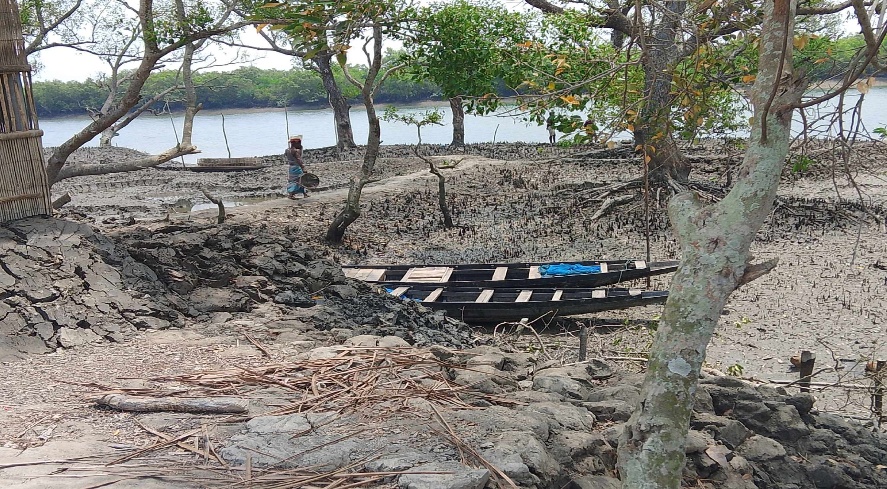
The authenticity of Mouwali and Bowlai (professional honey and wood collectors) is decreasing because the farmers are moving towards this indigenous profession as their work decreases.
Shrimp cultivation became the profession for a specific group of people. But the other people became jobless. That is why they again protested for sweet water availability and wanted to go back to rice cultivation. Another problem arises as a new virus infects the shrimp. This has lessened shrimp cultivation as it became less profitable.
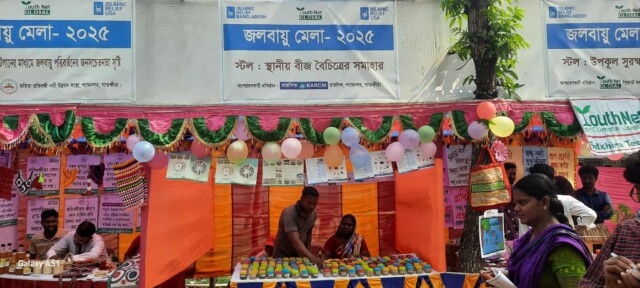
According to the local people’s estimation, they are saying that the amount of rainfall has decreased in that region, and this is one of the main reasons for increasing salinity. If there were proper rain, then the salt from the soil would have washed out and the sweet water reservoir would have filled with sufficient water. Though the salinity was high, the land was enough to be cultivated for themselves. But now, with the increase in demand, the salinity and climate change have also increased. Therefore, now it is a big challenge for them to survive in this prevailing condition.
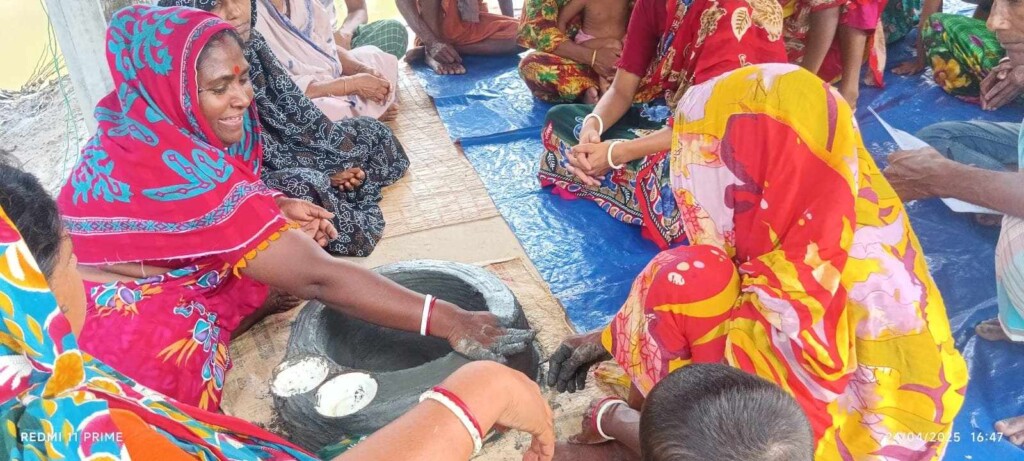
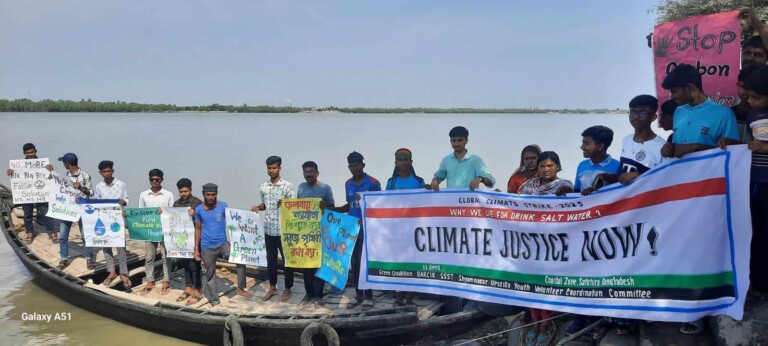
BARCIK is there to help the local people so that they can properly conserve their existing sweet water reservoir. These reservoirs should be maintained in such a way that they can be used year after year. People are being ready with the help of BARCIK for demonstration and movements.
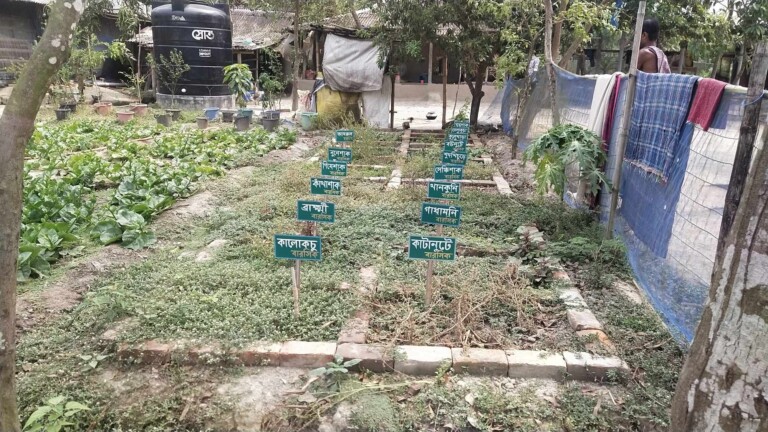
Other than that, BARCIK is trying to accelerate the present adaptation strategy and to preserve them within this prevailing problem. Salinity is not a new thing for these people, so they already have some strategy to fight with. BARCIK wants to spread this strategy to other people and to strengthen these for more difficult situations.
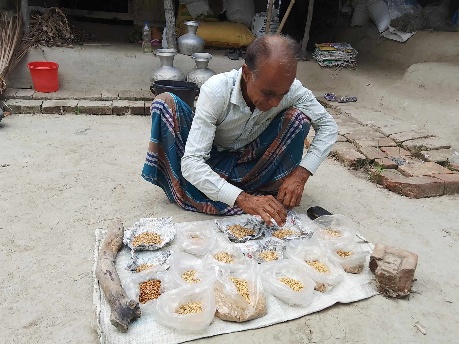
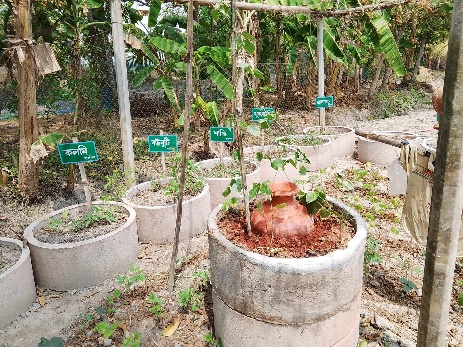
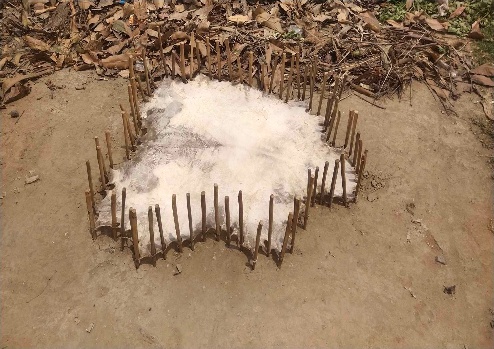
BARCIIK is doing some applied action research to identify the effectiveness of the salt-tolerant crop and their techniques. The result of this research will be spreading out to the people of the community through learning and sharing. For this, they need a common platform. BARCIK is trying to create a platform for them, like youth, women, civil society organizations, and, as a whole, the Green Coalition.
From a social aspect, BARCIK is contributing to identifying the social problem and making people aware of that issue so that they can stand up for their rights. Culturally our women are very vulnerable. If the rights of children, women, and the elderly can be ensured through demonstration, then life would be much easier for these climate-hazardous people.