By Silvanus Lamin
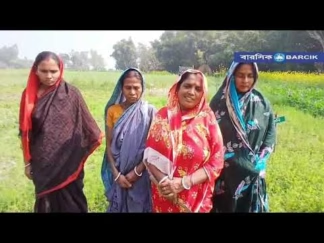
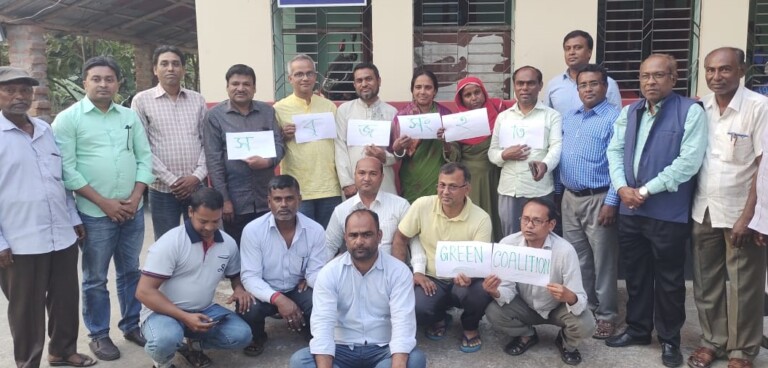
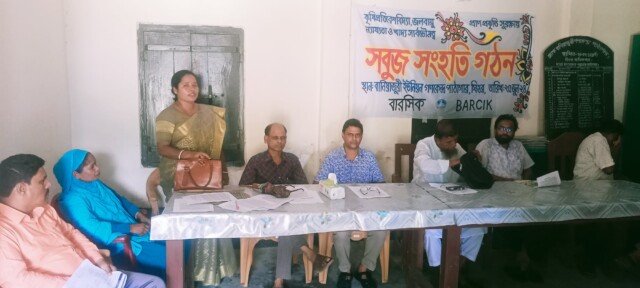
The Green Coalition is a network initiated by BARCIK in 2024 to strengthen the environmental Agroecology, Climate Justice and Food Sovereignty movement movement in Bangladesh. It brings together community members, youth, students, women, development activists, academics, environmental defenders, and even local elected representatives. BARCIK has already formed committees at district and sub-district levels to expand the reach and impact of this network. As a development and research-based organization, BARCIK has been working closely with local communities in remote areas since its inception. One of its key focuses has been documenting indigenous knowledge to highlight its relevance in mainstream development. By recognizing and respecting the wisdom of grassroots communities, BARCIK has documented numerous indigenous practices that help these communities adapt to the impacts of climate change. However, these practices are often sidelined or excluded from mainstream development agendas, which tend to follow top-down approaches that marginalize local voices. In fact, some modern development interventions have directly contributed to biodiversity loss and environmental degradation. Energy-intensive agriculture, monocropping, and unplanned infrastructure development such as encroaching on water bodies and felling trees have often caused more harm than good. These so-called “development” efforts have, in many cases, become environmental disasters. On the other hand, the insatiable greed of human beings has endangered nature’s many creations such as trees, vines, forests, rivers, and reservoirs. Those with economic power and influence bear a significant responsibility for this destruction. Such unsustainable practices have accelerated climate change, causing erratic seasonal changes that disrupt agricultural cycles and hinder socio-economic development. Farmers now struggle to grow crops in these changing conditions. Bangladesh faces annual natural disasters like floods, river erosion, salinity, cyclones, tidal surges, and waterlogging, resulting in significant losses and human suffering.
 oplus_1026
The Urgent Need for Environmental Protection and Climate Justice in Bangladesh
In the face of a rapidly changing climate, the protection of natural ecosystems, biodiversity, and the pursuit of climate justice have become more urgent than ever. As one of the most climate-vulnerable countries in the world, Bangladesh is experiencing the harsh consequences of environmental degradation, primarily driven by unsustainable agricultural practices, industrial pollution, and unplanned development.
Enviromental degradation and unsustainable agriculture
To achieve higher crop yields, vast agricultural lands in Bangladesh have been saturated with chemical fertilizers and pesticides. This intensive chemical use has gradually depleted soil fertility and productivity. Industrial waste continues to pollute rivers and wetlands, while the encroachment of water bodies for construction has led to the disappearance of rivers and canals from the national landscape. The loss of aquatic habitats has caused the extinction of numerous fish and other species critical to both ecological balance and human food chains. The indiscriminate use of agrochemicals has also decimated populations of beneficial birds, insects, spiders, and pollinators such as bees. Annually, agrochemicals worth over BDT 5,000 crore are sold in Bangladesh. Alarmingly, substances like Carbofuran which was officially banned in 2016 for its harmful effects on human health and soil, are still in use (Somokal, February 13, 2024). This toxic exposure is believed to be a major contributor to the growing prevalence of non-communicable diseases, including cancer.
According to reports, around 40,000 metric tons of agrochemicals are used every year in Bangladesh, concentrating an estimated BDT 50,000 million into agrochemical companies. Farmers now spend nearly 50% of their total production cost on these chemicals. In 2022 alone, 880,000 tons of chemical fertilizers were used in cultivation. Consequently, 76.2% of Bangladesh’s arable land now suffers from moderate to severe degradation, a figure recently confirmed by the Soil Resource Development Institute (SRDI). The country has lost over 1.124 crore hectares of productive land, an increase from 1.07 crore hectares in 2000 (The Daily Star, June 7, 2024). If this trend continues, Bangladesh could face a future without cultivable land within the next 63 years.
Farmers in crisis: Debt, soil fertility loss
Farmers are increasingly falling into debt, often borrowing from microfinance institutions or informal moneylenders to produce crops in their lands. After harvest, they are forced to sell crops at low prices to repay debts, retaining only minimal amounts for family consumption. Another destructive practice contributing to soil depletion is the extraction of nutrient-rich topsoil for brick-making. This topsoil which contains vital organic matter and organisms like earthworms is essential for long-term soil fertility. Its removal causes irreversible damage to farmland productivity, and experts warn it takes years for the soil to regenerate.
Poisoned lives, land and water
Toxic gases and agrochemicals are poisoning our soil, water, crops, and ultimately human health. The use of chemicals such as aluminum phosphide (commonly known as “gas tablets”) for fishing is highly dangerous to aquatic ecosystems. Widespread misuse of pesticides and fertilizers is rapidly eroding ecological balance and degrading the natural environment. There is a growing body of evidence linking the rise in kidney, liver, and lung diseases, congenital deformities, and cancer to exposure to these toxic chemicals. A recent report reveals that 64% of male cancer patients at the National Cancer Institute in Dhaka were involved in agriculture, indicating a strong correlation between pesticide use and cancer. Furthermore, a fisheries and livestock advisor recently stated that 60% of cancer patients among farmers suffer due to prolonged exposure to agricultural chemicals. The cost of cancer treatment has become unaffordable for many, often pushing poor and lower-middle-income families into extreme hardship and fatal outcomes.
Women and adolescent girls health risks and threat
Pesticide exposure has severe implications for women’s reproductive health. Studies show connections between such exposure and increased risks of breast and ovarian cancer, miscarriages, and birth defects. Women face reproductive challenges at every stage of life due to prolonged contamination from these toxic substances.
Climate change and ecological destruction
Local communities and farmers are increasingly suffering the consequences of climate-induced disasters, including early flash floods, prolonged droughts and floods, heatwaves, extreme salinity, irregular rainfall, cyclones, storms, and dense fog. These events destroy crops, damage livelihoods, and endanger lives. The overuse of chemical fertilizers, pesticides, and energy-intensive irrigation systems contributes significantly to carbon emissions, thereby accelerating climate change. This undermines traditional agroecological practices and threatens the food sovereignty of rural communities. In northern Bangladesh, where rainfall has declined, excessive groundwater extraction through deep tube wells is depleting the water table at an alarming rate.
Drinking water crisis
A growing water crisis looms over both northern and coastal areas, affecting people, livestock, and wildlife alike. Rising salinity in coastal areas is worsening waterborne diseases and severely affecting reproductive health. In the southwest coastal region, adolescent girls are resorting to birth control pills to delay menstruation due to the scarcity of clean water, which leads to serious gynecological issues. Simultaneously, communities in Barind, wetland, coastal, and floodplain areas are witnessing worsening food insecurity, rising unemployment, forced displacement, and increased migration. Water scarcity has sparked conflicts among local communities, farmers, and deep tube well operators in the Barind Tract—tragically, two Indigenous farmers recently took their own lives due to these water-related disputes.
BARCIK’s Response: Mobilizing through the Green Coalition
BARCIK aims to stop the destruction of biodiversity frequent use of agrochemicals and environmental degradation through its development interventions. However, this task is too vast for one organization alone. Collaborative action is essential and this is where the Green Coalition plays a vital role. Members of the Green Coalition are conscious of their responsibilities and are committed to collective action for protecting the environment.
The Coalition’s objectives include:
- Preventing environmental destruction and degradation.
- Safeguarding all elements of nature, including plants, animals, and ecosystems.
- Combating pollution of air, soil, and water.
- Promoting the interdependence and mutual respect of all living beings.
- Advocating for ecological justice.
- Organizing social awareness campaigns and movements for natural resource regeneration.
- Advancing food sovereignty through agroecological practices.
- Building a strong social movement at local, national, and regional levels for climate justice.
To serve its objectives the Green Coalition works as information hub, educator, persuader and entertainer. Below on how this network works is described.
The Green Coalition as an Information Hub
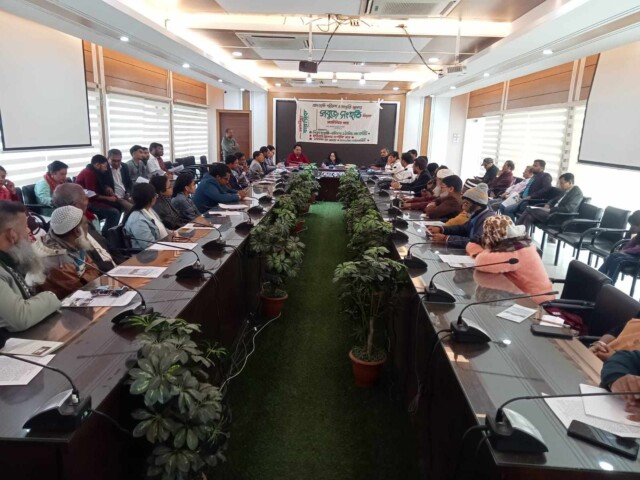
Information is power, especially in the fight against environmental degradation. Without access to accurate, timely, and context-specific information, communities are left disempowered and unable to take meaningful action to protect their surroundings. The Green Coalition serves as an information hub, collecting, curating, and disseminating knowledge on environmental laws, climate change policies, biodiversity conservation, and emerging ecological threats across Bangladesh.
This hub plays a vital role in enabling people to understand the root causes and consequences of environmental destruction, as well as the legal and policy mechanisms available to address them. The Green Coalition gathers data through research, investigative field studies, participatory observations, and extensive literature reviews. It also documents locally rooted and time-tested practices that promote environmental sustainability, such as agroecological farming, nature-based solutions, organic gardening, and indigenous knowledge systems related to climate adaptation and natural resource management. By sharing this valuable knowledge with communities, civil society actors, and other stakeholders, the Coalition fosters a culture of environmental awareness and informed activism. In doing so, it helps to build a knowledge-based movement, empowering individuals and groups to take credible, evidence-backed action for the preservation and restoration of ecosystems and biodiversity.
The Green Coalition as an Educator
People, even those deeply connected to nature, often lack access to the technical knowledge and policy frameworks necessary for effective environmental advocacy. Many remain unfamiliar with key national and international documents such as the Bangladesh Climate Change Strategy and Action Plan (BCCSAP), the National Adaptation Plan (NAP), environmental laws and acts, and global agreements like the Convention on Biological Diversity (CBD). There is also limited understanding of sustainable practices like agroecology, climate change adaptation, and ecosystem-based resilience strategies.
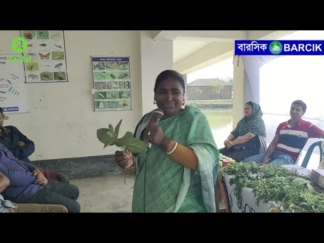
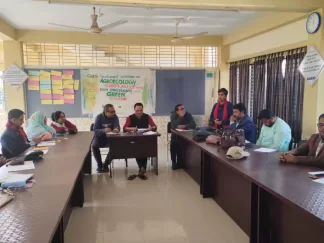
Recognizing this gap, the Green Coalition takes on the role of an educator, helping people connect their environmental experiences with broader policy narratives and frameworks. Through workshops, trainings, dialogues, and awareness sessions, it builds the capacity of community members, youth, women, development workers, and local leaders. These sessions are facilitated by experienced professionals, including academics, researchers, farmers with practical knowledge, and senior BARCIK staff, who share insights in accessible and participatory ways. This educational role not only enhances public understanding of biodiversity and environmental policy but also strengthens local efforts to protect and manage natural resources. Educated and informed citizens are more likely to become agents of change, actively engaging in advocacy, policy dialogue, and on-the-ground action to reverse environmental degradation and ensure a sustainable future for all life forms.
Green Coalition as a Persuader
Equipped with information and a solid understanding of environmental protection, climate change, and relevant national and international policies, the members of the Green Coalition actively engage in campaigns and evidence-based advocacy. The goal is to sensitize and influence policymakers and state authorities to take meaningful action for environmental protection. To achieve this, the Green Coalition organizes seminars, symposiums, public discussions, and sharing meetings where state officials and other stakeholders are invited.
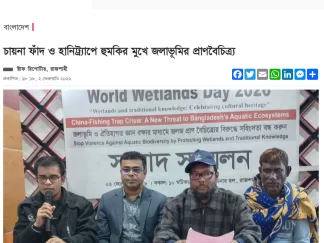
These platforms are used to present research findings, community observations, and real-life accounts of environmental degradation. Such direct interactions allow policymakers to better understand the long-term consequences of unplanned development and the ongoing loss of biodiversity across the country. In addition to public events, the Coalition also submits memoranda, policy briefs, and research reports to relevant government departments, urging the inclusion of environmental priorities in planning and decision-making. Green Coalition arranges press conference in national and regional levels sharing alarming data and stories about environmental decline, creating a sense of urgency among citizens and institutions alike. Through these activities, the Green Coalition seeks to generate public pressure on authorities to either introduce new policies or ensure the effective enforcement of existing ones. The advocacy emphasizes that safeguarding nature is not just an environmental issue it is a matter of national well-being. In this way, the Green Coalition acts as a strong and strategic persuader, motivating both state actors and society at large to protect and restore the natural environment.
Green Coalition as an Entertainer
People across all walks of life find joy and peace in nature. From the chirping of birds and the sight of wild animals to the greenery of forests, herbs, uncultivated plants, and diverse flora and fauna, all these natural elements bring emotional and psychological comfort to human lives. Nature lovers and everyday citizens alike seek refuge in natural landscapes during vacations, visiting forests, mountains, rivers, and seas to reconnect with the environment and escape the stress of daily life. The beauty of nature entertains, heals, and inspires a sense of wonder and gratitude. One of the important goals of the Green Coalition is to restore and protect this natural beauty by reviving biodiversity and conserving the ecosystems that support it.
The Coalition promotes community-led eco-tourism, agroecological farming, and the revitalization of indigenous knowledge and practices, all of which play a crucial role in ecological restoration and sustainable living. These initiatives not only empower communities and build environmental resilience but also help to bring back the natural charm that once defined rural and wild landscapes. If these efforts are successfully expanded and replicated across the country, they will significantly contribute to restoring the natural beauty of Bangladesh. In doing so, the Green Coalition enables future generations to enjoy, celebrate, and be entertained by the wonders of a thriving natural environment.
Conclusion
In a time of deep ecological crisis, when concrete replaces canopy and rivers gasp beneath plastic, the Green Coalition stands as a beacon of hope, illuminating the path with knowledge, compassion, and collective strength. It reminds us that agroecological protection, climate justice and food sovereignty movement is not the task of a few, but the shared responsibility of all who breathe, grow, and dream on this Earth. Through its role as an information hub, educator, and tireless advocate, the Green Coalition nurtures a deeper connection between people and nature reviving the forgotten wisdom, amplifying community voices, and awakening the power of informed action.
Yet, this mission cannot succeed in isolation. The call is clear and urgent: to stand together, hand in hand, heart with heart, for a greener, kinder, and more harmonious world. Let us listen to the whispers of the wind, the songs of the soil, and the cry of the earth. Let us rise not only as protectors but as healers of the land that sustains us. For in saving nature, we are ultimately saving ourselves.
We therefore, urge all to join the movement. For a better world. A green world. A living, loving and caring home for all life forms now and obviously for the new generations to come.