By Alpona Nafak, from Kalmakanda, Netrakona
Bonbera is a small border village in Kharnai Union, Kolmakanda upazila of Netrakona, home to 23 indigenous households where 18 Hajong and 5 Garo families are concentrated. Nestled amidst green hills, the southern part of the village hosts the daily “Garo Bazaar,” a lifeline for local communities.
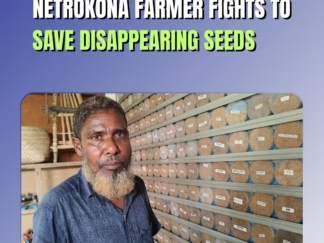
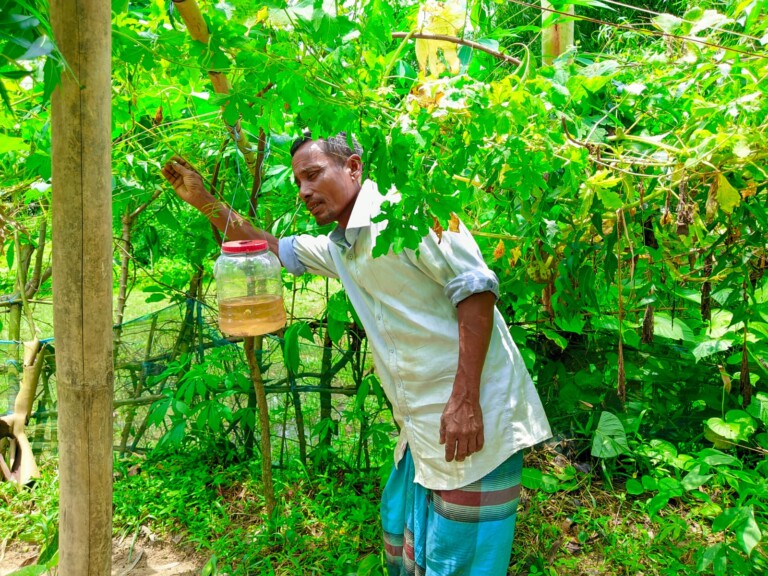
Here lives Nahajan Hajong, a 47-year-old modest farmer, father of three. Over time, his 64-decimal land has been transformed into the “Bonbera Agroecology Learning Center” which is known as a living school of sustainable farming practices to others.
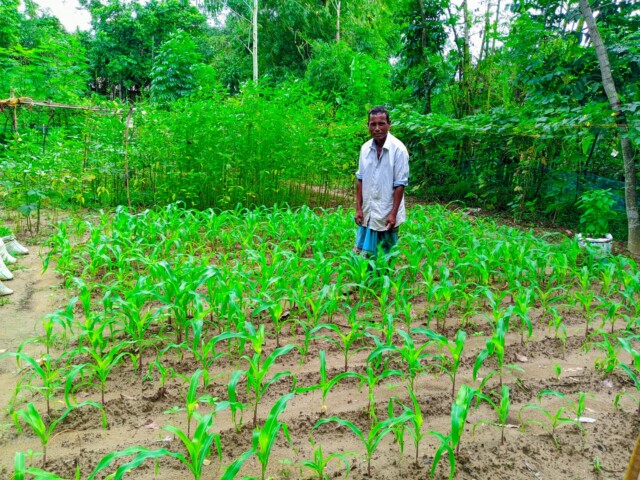
Since 2012, Nahajan has been involved with BARCIK and actively participated in its ecological agriculture initiatives. His home has now become a vibrant space for learning, experimentation, and community transformation.
The learning center focuses on conserving and practicing indigenous farming wisdom, promoting organic methods, saving local seeds, ensuring women and youth participation, and teaching eco-friendly adaptation techniques.
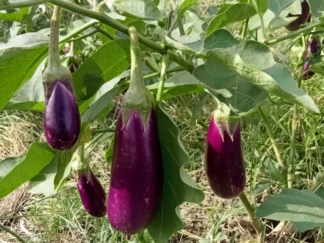
On his land, Nahajan cultivates a wide variety of vegetables and crops such as ginger, chili, eggplant, cucumber, pumpkin, spinach, okra, beans, corn, and cassava. He innovatively grows vegetables in sacks in his yard, and produces vermicompost both for personal use and sale.
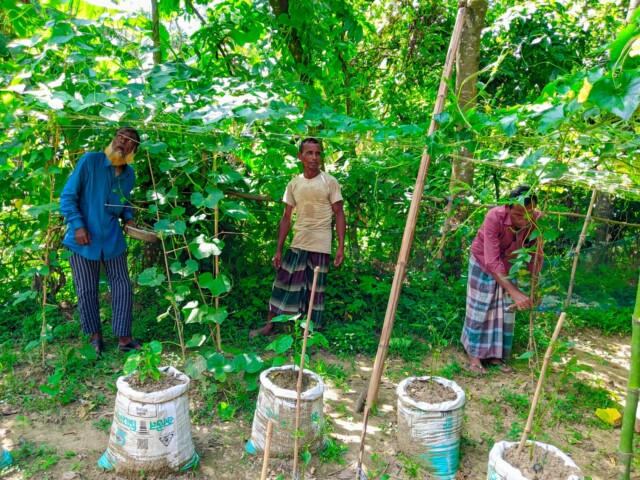
He proudly said, “I now produce vermicompost on a larger scale so that I can use it not only for vegetables but also for rice and other crops. It keeps the soil healthy and protects the environment.”
This year, he grew Boro rice entirely with vermicompost. He even distributed 1 maund and 2 kg to neighbors and sold one kg in the local market.
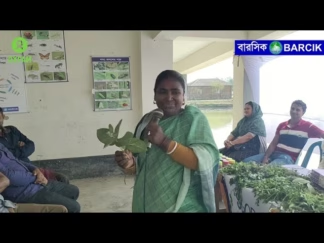
The learning center has hosted many programs such as discussions on the hazards of chemical fertilizers, workshops on food sovereignty and traditional knowledge for disaster management, training on compost production, and even distribution of cloth bags to reduce plastic use.
So far, 12 families have visited to observe his work. Seeds of local vegetables like bottle gourd, chili, and cassava have been distributed to 15 families. Interest is growing among others and many travel from far-off areas to learn about vermicomposting. Nahajan offers hands-on training and explains its benefits with dedication.
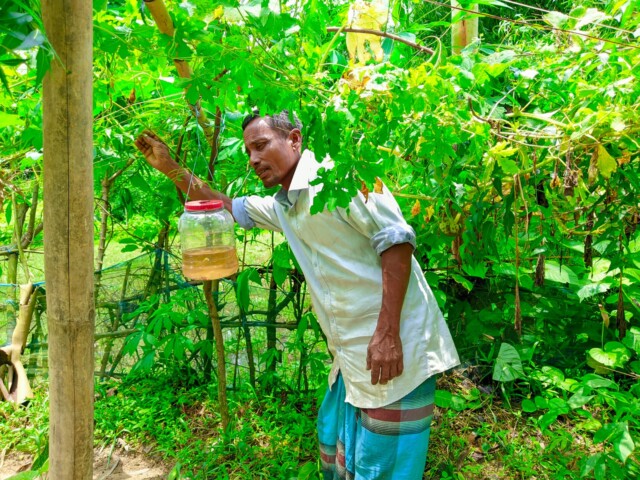
He went on saying, “Earlier, no one used to visit me. Now, people come to see my work. I’m known through what I do. My children are in grade ten, and their education expenses are covered by selling vegetables. This work has given me an identity.”
Through commitment, vision, and community spirit, a once-ordinary farmer has become an extraordinary example of how local knowledge can shape sustainable futures.