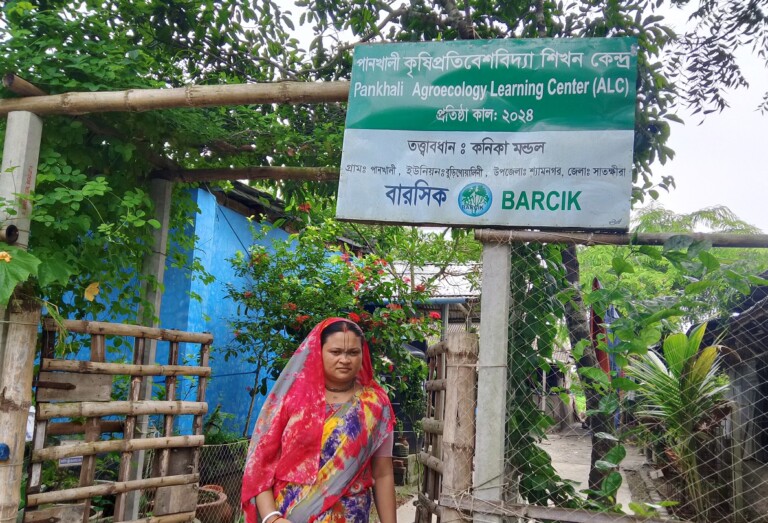
By Monika Paik, from Shyamnagar, Satkhira
The Burigoalini Union in Satkhira’s Shyamnagar Upazila, located near the Sundarbans, is a coastal area vulnerable to climate change, frequent natural disasters, river erosion, rising salinity, and various human-induced crises. Despite these challenges, local farmers especially women have adapted innovative techniques to grow vegetables successfully in saline-prone lands.
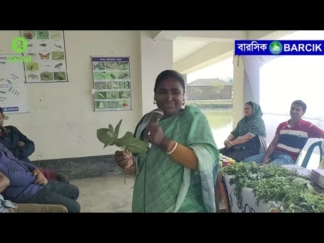
In 2024, under the supervision of farmer Kanika Rani Mondal, the “Pankhali Agroecological Learning Center” was established in Pankhali village of Burigoalini Union. This center was created with the aim of promoting food sovereignty, reducing market dependency, practicing climate adaptation strategies, and sharing local knowledge.
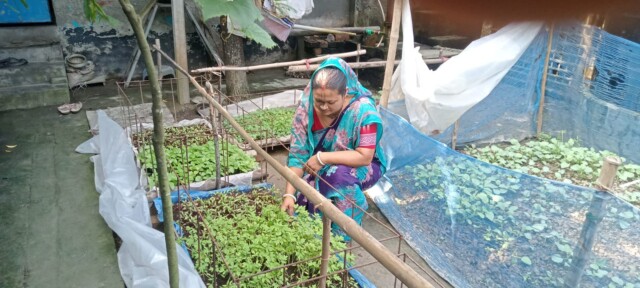
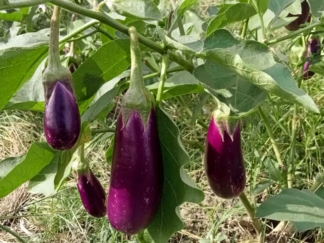
Kanika utilizes every inch of her homestead, growing vegetables in sacks, crates, plastic containers, metal tins, and reused materials. Her center conserves local rice varieties, native seeds, vermicompost, pit compost, uncultivated food plants, and various medicinal plants. These resources inspire the younger generation to engage in safe and sustainable food production.
She owns 5 bighas of land of which 4 bighas are used for integrated farming and vegetable cultivation around field boundaries, while 1 bigha of homestead land is used for seasonal vegetables throughout the year. Her home also has indigenous fruit trees and timber species. In order to protect against salinity and meet nutritional needs, she cultivates uncultivated and medicinal plants in raised beds and containers.
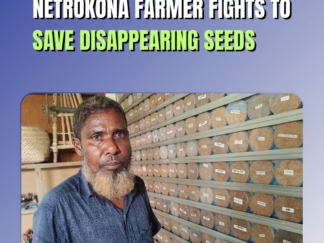
Her organically produced vegetables have high demand in both the local market and among neighbors. From seedling production to conservation, Kanika manages everything herself. She also runs a small seed bank at home and sells saplings grown from her conserved seeds.
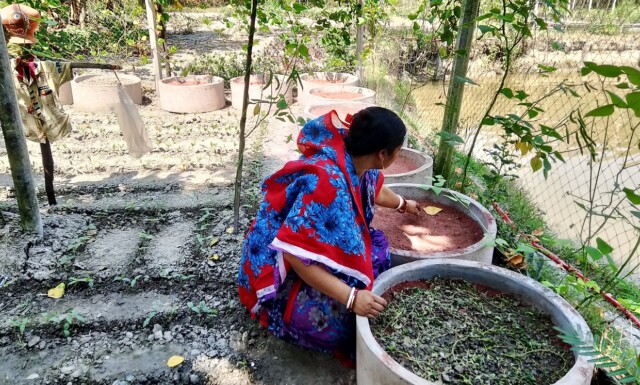
She conserves 55 types of vegetable seeds, 5 varieties of chili, organic pest repellents, and dried vegetables for emergency use. Her efforts help her to reduce market dependency and foster stronger community ties through mutual exchange of resources.
Kanika says, “I truly enjoy farming. That joy brought me here. I used to grow vegetables before, but not in an organized way. I relied on chemicals and did not know about organic methods. In 2024, I connected with BARCIK and participated in various trainings arranged by the organization, where I learned about the value of uncultivated and medicinal plants.”
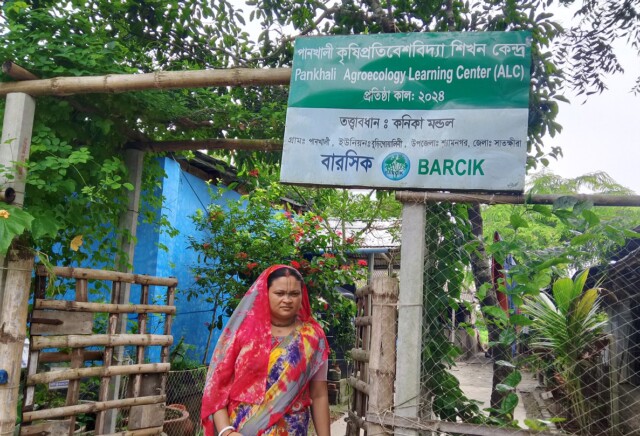
Her activities have been visited by youth development officers, local farmer groups, Shotabari members, youth representatives, and members of the agroecology learning center (ALC). Kanika dreams of transforming her home into a model farm, an agricultural school, and a knowledge hub.
The agroecology learning centre of Kanika has now become a focal point for learning, knowledge sharing, and agroecological practice in the coastal region contributing significantly to environment-friendly food production and ecological sustainability.