By Mofijur Rahman from Shyamnagar, Satkhira
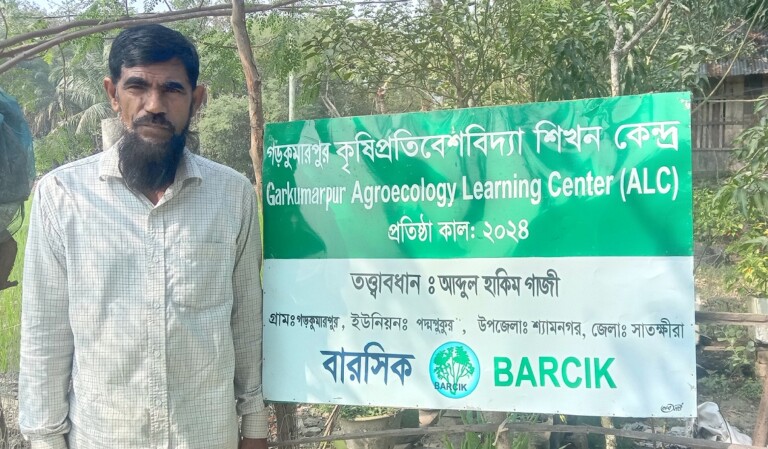
Bangladesh’s coastal region is one of the most disaster-prone areas in the world, and Shyamnagar in Satkhira, adjacent to the Sundarbans, is a striking example. Cyclones, tidal surges, river erosion, and salinity are common here. Yet, some individuals refuse to surrender to such adversity and continue to strive for a better life. One such inspiring person is veteran farmer Abdul Hakim Gazi from Gorokumarpur village in Padmapukur Union.
In 2024, with support from BARCIK, he established the “Gorokumarpur Agroecological Learning Center” at his homestead. This center has become a symbol of harmony between agriculture, environment, and community cooperation.
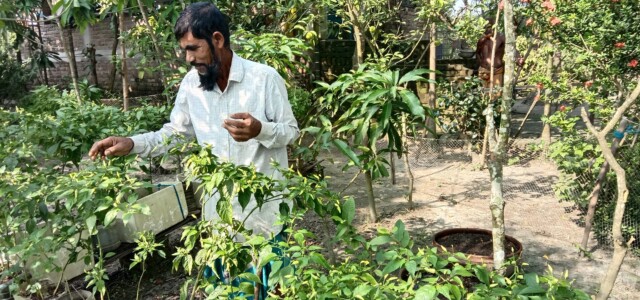
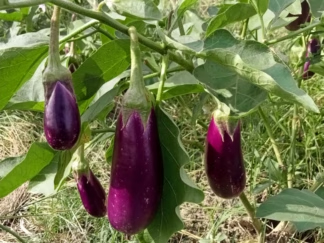
Abdul Hakim has loved farming since childhood. Despite recurring natural disasters, he grows a variety of vegetables, fruits, rice, and fish on his land. His production includes over 20 types of crops and fish 0such as spinach, eggplant, pumpkin, tomato, fennel, rice, as well as carp, catla, tilapia, prawn, and more.
Surrounding his homestead are fruit-bearing, medicinal, and timber trees like mango, jackfruit, lychee, coconut, moringa, nishinda, kewra, and babla. These not only fulfill his family’s nutritional needs year-round but also benefit neighbors. His household rarely needs to purchase food from the market.
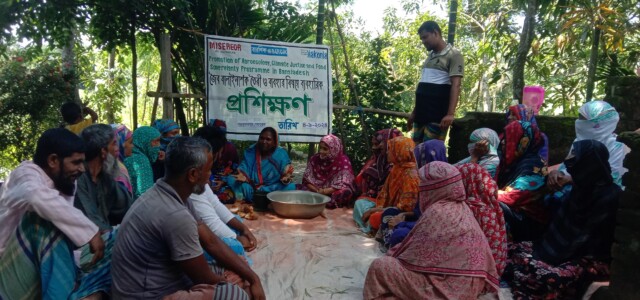
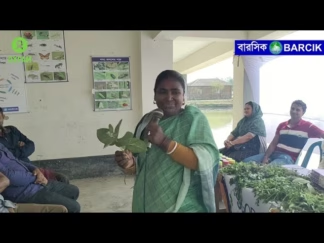
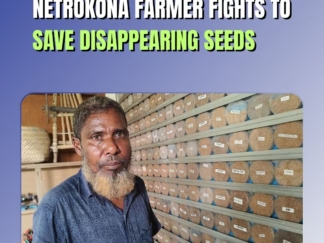
The learning center has also become a resource hub for other local farmers. Many seek his advice and receive seeds he conserves and shares. During the last monsoon, he distributed seeds of ridge gourd, cucumber, bottle gourd, and pumpkin to at least 15 farmers. He has also helped others access agricultural loans, which has had a significant impact.
Hakim practices eco-friendly farming by using organic fertilizers, composting waste, and repurposing discarded materials for crop production. His sustainable approach is now being adopted by others in the community.
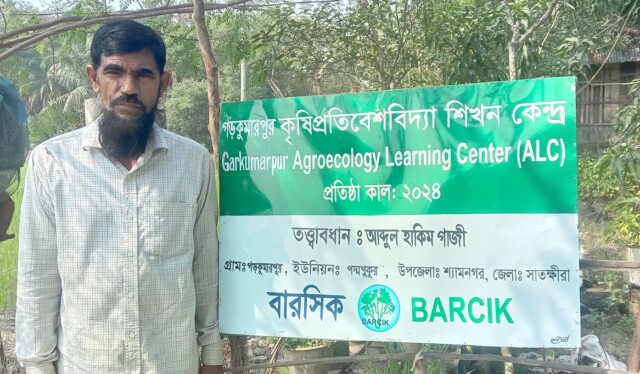
He believes that to ensure food security and farmers’ well-being, agriculture must be freed from market and corporate dependence. Farmers should have control over their resources, and their knowledge and their lived experiences must be recognized and valued.