By Mofijur Rahman, from Shyamnagar, Satkhira
In the climate-vulnerable coastal belt of Bangladesh, Shyamnagar Upazila in Satkhira stands out as one of the most challenging regions for agriculture. Frequent cyclones, tidal surges, rising salinity, and the growing impacts of climate change have made traditional farming both risky and uncertain. Yet, even within this adversity, some individuals are cultivating resilience and inspiring transformation.
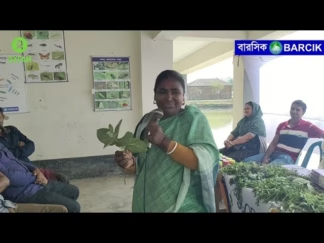
One such inspiring figure is Rabeya Sultana, a resident of Pakhimara village in Padmapukur Union. In an area dominated by saline shrimp farming, she has established a unique biodiversity-based agricultural initiative on her homestead, an initiative she calls Shotobari, also known as the Nutrition Bank. More than a means of feeding her own family, Rabeya’s endeavor has become a beacon of biodiversity conservation, women’s empowerment, and climate resilience.
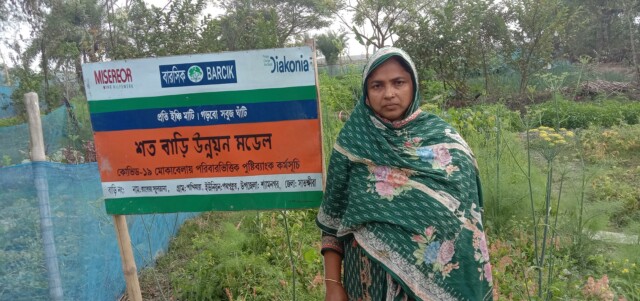
Amid the nationwide concerns over food and nutrition security during the COVID-19 pandemic (2019–2020), BARCIK introduced the Nutrition Bank initiative to promote household-level production of safe and nutritious food. Rabeya’s home was chosen as a pilot site due to her passion, innovative spirit, and strong community engagement.
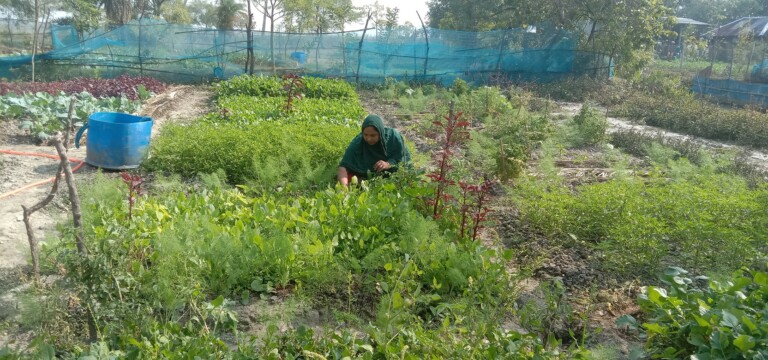
Despite being surrounded by shrimp farms irrigated with saline water, Rabeya reclaimed the land around her home using organic techniques to improve soil fertility. She began cultivating vegetables year-round, planting fruit trees, and conserving native seasonal seeds transforming her small homestead into a thriving, sustainable food garden.
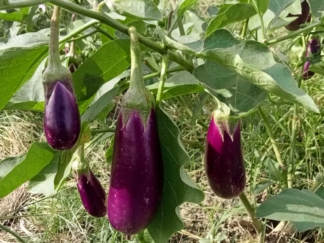
Rabeya said, “My family has four members. In order to avoid buying vegetables from the market, I grow everything we need myself,” Her garden flourishes with a wide variety of vegetables such as bottle gourd, Malabar spinach, sponge gourd, bitter gourd, pumpkin, cucumber, okra, yard-long beans, spinach, red amaranth, radish, turnip, mustard greens, tomato, chili, eggplant, and papaya. She also grows medicinal plants like thankuni and others depending on the season.
But Rabeya’s impact goes far beyond her own family. Neighbors often come to purchase vegetables directly from her homestead, which has now become a trusted local source of fresh, organic produce that earns her household the reputation of a “community market and nutrition center.”
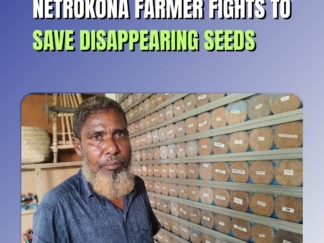
Each year, Rabeya collects and conserves 7 to 8 varieties of native seeds, which she shares and exchanges with others in the community. “If someone needs seeds, I give them. I also exchange seeds with others,” she says. This practice has lowered production costs for local families, promoted the conservation of native varieties, and strengthened community-based food systems. She dreams of building a comprehensive seed bank rooted in traditional ecological knowledge.
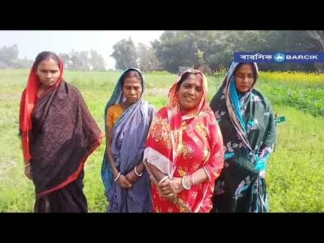
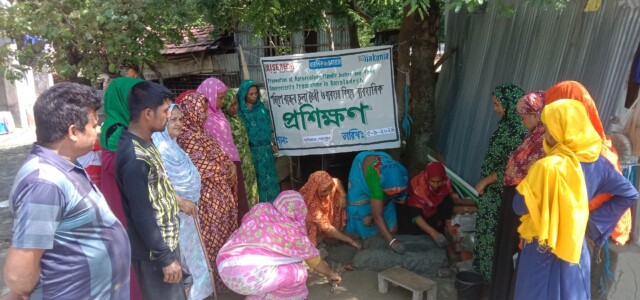
Inspired by the Shotobari model, Rabeya has also mobilized a local women’s group. Monthly meetings, training sessions, and small community fairs are now regular features, providing spaces for women to share experiences, exchange seeds, and strengthen their agricultural knowledge. The group also runs a collective savings program, fostering financial empowerment alongside food and nutrition security.
Through this initiative, local women are gaining skills in nutrition, agroecology, environmental conservation, and food sovereignty. The Shotobari has thus evolved into both a nutrition hub and a platform for women’s leadership and empowerment.
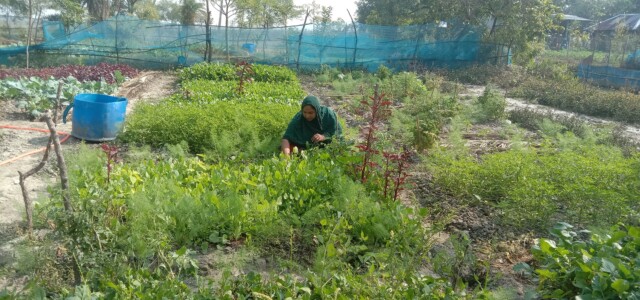
Rabeya’s Shotobari has grown into a vibrant community learning center. Her example has encouraged many others, particularly those once reliant on market-oriented agriculture to shift toward homestead-based food production. Her story is a testament to the power of personal dedication, community collaboration, and shared learning. In a region grappling with salinity and climate shocks, Rabeya Sultana is proving that sustainable agriculture and food security are achievable, even in the harshest conditions.
Today, her Shotobari stands as an agricultural initiative and as the heart of a grassroots movement where women are leading the way in building a nutritious, environmentally sustainable, and self-reliant life and livelihoods.