By Rasheda Akter from Manikgonj
For many teenage girls, the onset of adolescence can be confusing, even frightening especially when there is little space to talk about it. But at Motta High School in Manikganj, a small initiative has quietly transformed that experience, giving hundreds of girls the confidence to face a natural stage of life without fear or embarrassment.
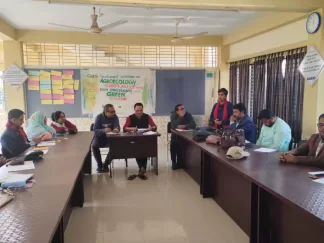
The change began with the efforts of BARCIK, a development organization working in Manikganj district to prevent child marriage, combat violence against women and children, promote reproductive health rights, and strengthen women’s empowerment. As part of its ongoing work, the organization regularly arranges discussions, seminars, and training workshops in educational institutions on topics such as preventing child marriage, ensuring harassment-free schools, and helping adolescent girls understand the changes of puberty.
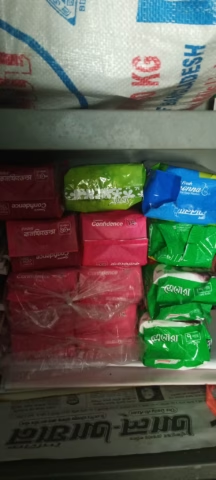
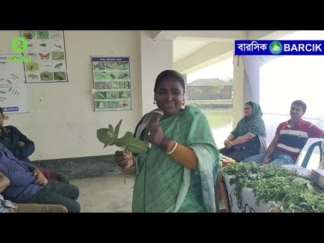
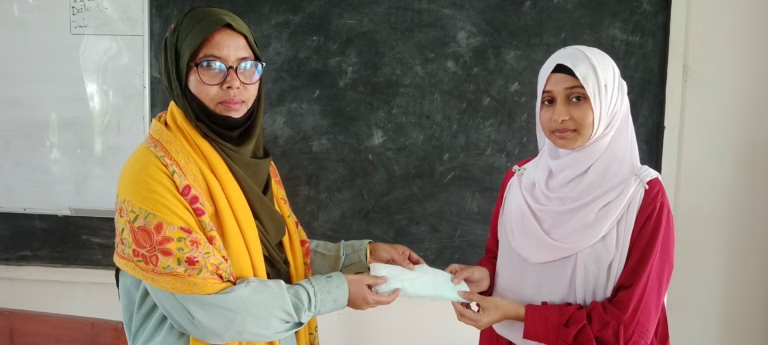
One such discussion session on adolescent health was held at Motta High School under Manikganj Municipality. During the program, students were introduced to the physical and emotional changes of adolescence and the importance of hygiene and self-care. At the end of the event, BARCIK distributed ten packets of sanitary napkins to the school so that girls could receive emergency support when needed. The school’s head teacher assigned senior teacher Ruby Akter to manage the initiative.
That modest beginning has grown into a lasting practice. For the past four years, under the supervision of senior teacher Ruby Akter, the school has continued distributing sanitary napkins regularly. What started as a small emergency stock has become an important support system for the students.
Teacher Ruby Akter said with confident smile, “BARCIK first gave us ten packets of sanitary napkins to help girls during emergencies. That was how our journey started. BARCIK showed us the way, and we continued the work.”
At first, the school distributed the napkins free of charge for a year. But soon teachers noticed that some students began taking them almost regularly. To prevent misuse, the school decided that each piece would cost five taka.
“Now the girls buy them during emergencies,” Ruby Akter explained. “But if a student experiences her first period at school, we always give it to her free of charge to encourage and support her. Everyone in the school knows they can come to me if they need one.”
Beyond providing sanitary products, Ruby Akter and her colleagues have also created a safe space for conversation. She said, “We talk about these issues regularly in class. The girls are becoming more aware, and many of them share their concerns and personal experiences with me.”
The assistant head teacher echoed this sentiment, describing BARCIK as a close partner of the school. He said, “BARCIK has been supporting us for a long time. Their activities are very meaningful. In our classes we discuss child marriage, adolescence, and sexual harassment with students. I regularly talk with them about menstrual hygiene and the importance of nutritious food during this time.”
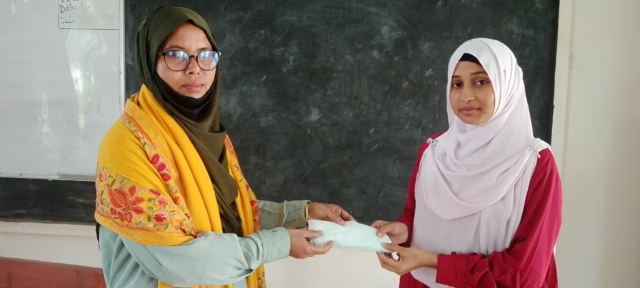
He added that girls now feel comfortable seeking help when they face difficulties at school. “If a student starts her period while at school, she usually informs Ruby Madam. If she is not available, the girls often come to me. If they need to go home, we allow them to leave. Otherwise, the school provides sanitary napkins so they can stay in class-he said.”
The impact has been visible. In the past, many girls would skip school during their menstrual periods. Now, with support available on campus, absenteeism has significantly decreased. He said, “Girls are much more aware now. We hope these awareness activities continue regularly.”
Head teacher Lal Mia believes the initiative has brought lasting benefits to the school community. He said, “BARCIK has been working in Manikganj for a long time, and their work is truly commendable. The organization addresses issues like child marriage, sexual harassment, and violence against women and children at the school level. Because of this, students learn important life skills.” He went on saying, “BARCIK initially distributed sanitary napkins at our school, and we appreciated the effort very much. Later, we decided to continue the initiative ourselves. We are grateful to BARCIK for starting such an important program.”
What began that day as a small gesture with ten packets of sanitary napkins has grown into something far more meaningful. Today, it stands as a quiet but powerful example of how a simple idea, nurtured with care and commitment, can strengthen the confidence of adolescent girls and help them face the future with dignity.