By Rukhsana Rumi, from Netrakona
Introduction
Bangladesh is an agriculture-based country, though not everyone in rural areas has the same interest or knowledge in farming. Abul Kalam (50+), a farmer from Moujebali village in Netrokona Sadar, supports his family of eight (wife, four daughters, two young sons) with just 20 decimals of land. Despite limited resources, he has conducted several farming initiatives.
About the Learning Center
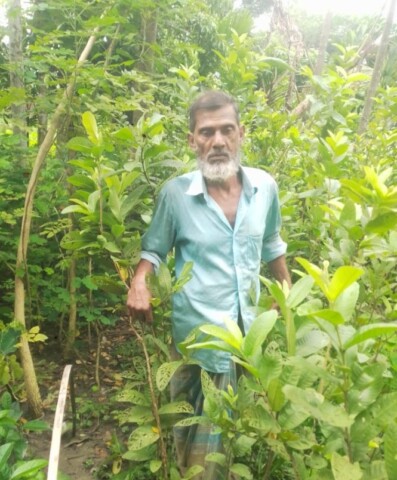
On his 20-decimal homestead, Kalam has developed a diverse farm. He uses every inch of his land in his homestead, maintaining a small nursery of timber, fruit, medicinal, and vegetable seedlings such as mango, jackfruit, guava, neem, papaya. He sells seedlings worth BDT 20,000–30,000 annually. He also leases 30 decimals of land so that he could farm rice to meet his family food needs.
Crops and Methods
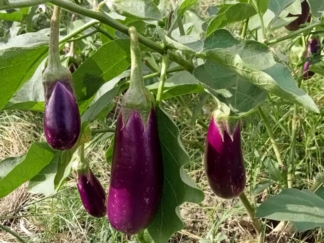
He grows various vegetables year-round such as bottle gourd, eggplant, pumpkin, tomato, long bean, papaya using organic methods, including vermicompost and cow manure in his homestead land. This enables him to meet family vegetable needs and even he can sell the surplus in the market earning him additional cash which he uses for maintaining family expense. He also exchanges these vegetable with his neighbors making him to cultivate good relationship with them.
Adaptation Strategies
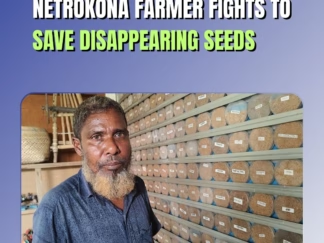
Farmer Abul Kalam is producing and selling diverse seedlings and he has a small seed banks where he conserves seeds of native crops varieties. He shares this seeds with other farmers during the crisis due to different disasters such as floods. Conserving seeds enables him to farm crops regardless of any disasters or seed crisis in the area. Abul Kalam also plants native and fruit trees involving other farmers and youths in the area. The involvement of youth in the tree plantation educates them about the importance of native trees to combat climate change and reduce risks to lands during the disasters.
 oplus_2
Programs at the Center
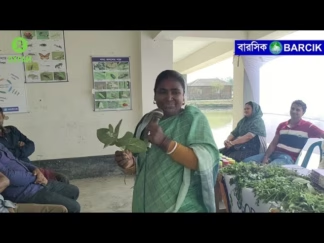
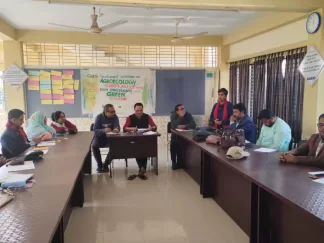
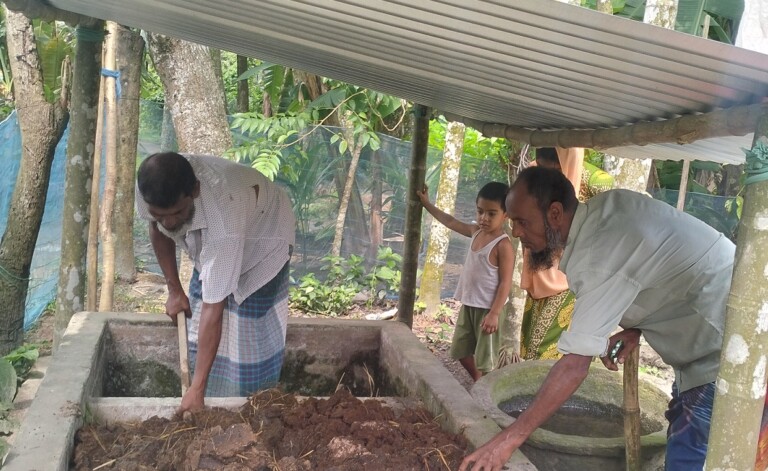
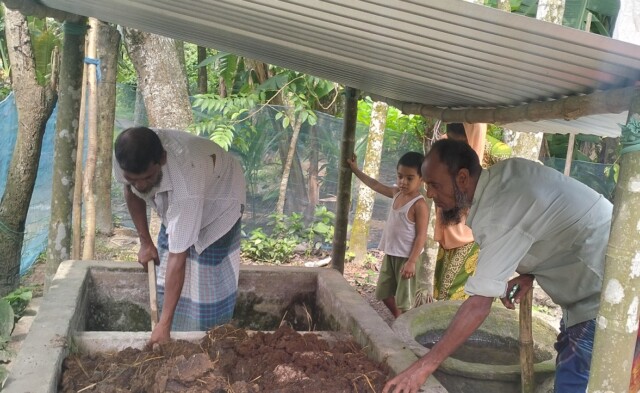
The house of is now turning to be a training centre and home for learning, sharing and exchanging knowledge among farmers youths and women. The centre hosts training on risks of chemical agriculture, the beneficial aspects of agroecology, impacts of climate change and local adaptation measures. Through the centre Kalam conducts hand-on training on vermicompost making and organic pests control enabling the farmers to use nature based inputs in their farming which keeps the environment and soil alive and fresh.
Reducing Market Dependence
Adopting agroecology as the key method for farming Kalam and local farmers now rely less on market seeds. They produce, conserve, and exchange seeds, ensuring year-round vegetable cultivation without buying from the market. Abul Kalam also rears livestock such as cattle, ducks, and chickens leading him to get egg, milk, and meat that ensure his family nutrition. Livestock rearing also earns him cash selling eggs and milk and even cattle and goat in the market.
Conclusion
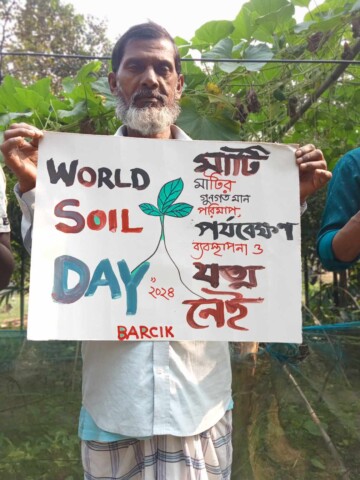
Abul Kalam with the facilitation support from BARCIK has transformed his house as a learning and sharing centre adopting agroecology. Agroecological practices reduce his production cost, equip him with his own native seeds, earn him additional cash, enable him to adapt to climate change impact, enhance his social and cultural interaction, educate him on his rights as well as other related issues (climate change, food sovereignty, gender etc.) and enable him to cultivate good relationship with others. Additionally, the agrecological practices contribute to increasing his economic sustainability keeping the environment and nature rich with biodiversity.