By Shimul Biswas, from Singair, Manikganj
In Bangladesh, climate change has become an undeniable reality for farmers. Drought, excessive rainfall, cyclones, and erratic monsoons are increasingly putting nature-dependent livelihoods at risk. Among the most vulnerable are farming communities, whose survival is closely linked to the land. Yet, many farmers are not giving up; they are innovating, adapting, and seeking solutions grounded in their own knowledge and traditions.
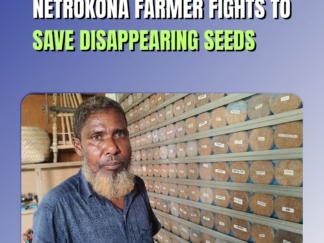
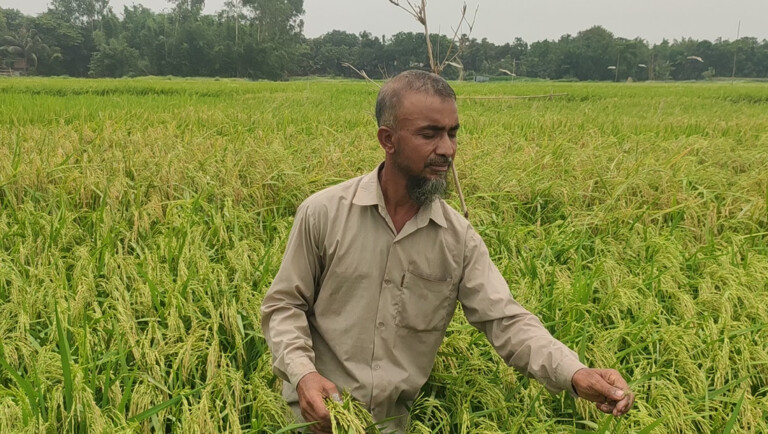
One such farmer is Mozibur Rahman (54) from South Baldhara village in Singair, Manikganj. Having years of experience in agriculture, Mozibur has chosen a different path by blending traditional wisdom with ecological practices to counter the uncertainties of climate change. His philosophy is simple but powerful saying, “We cannot survive by fighting nature. We must learn to coexist with it.”
Like many farmers, Mozibur once relied on conventional paddy, wheat, and vegetable farming. But frequent floods, droughts, and unpredictable weather often destroyed his crops, leaving his family struggling. Those repeated losses pushed him to think differently.
Being connected and following the advices and encouragement BARCIK, he began experimenting with environment-friendly farming techniques. His research focuses on selecting crop varieties that can withstand changing weather and developing low-cost, eco-friendly farming practices. For the past three years, Mozibur has been carefully testing high-yield paddy seeds from his own field, aiming to develop a climate-resilient and productive rice variety. He is also conducting experimental plots to identify rice strains that can adapt to extreme weather.
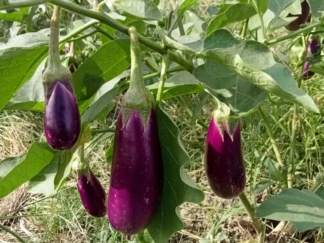
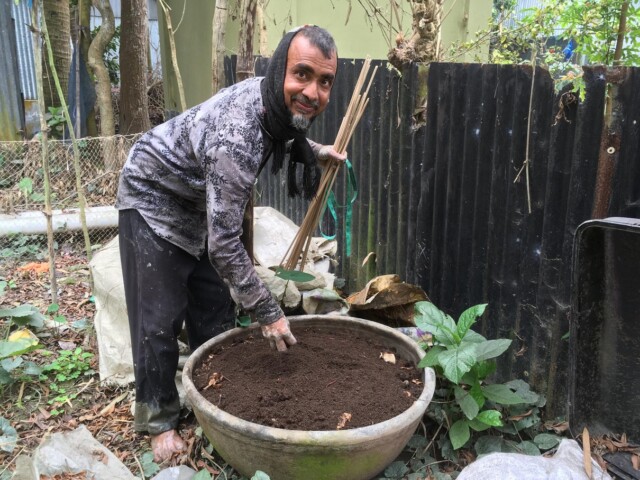
Mozibur conserves seeds of 15 local varieties at his house including rice, pulses, vegetables, and spices. He also conducts comparative studies between organic and chemical farming to strengthen ecological farming. Instead of relying heavily on chemical fertilizers and pesticides, he applies organic alternatives like cow dung, compost, vermicompost, bio-fertilizers, neem extract, and pheromone traps.
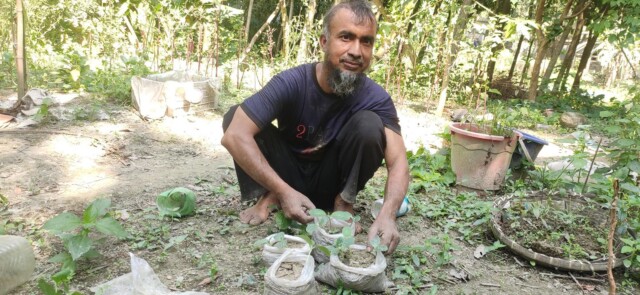
He also practices crop diversification growing mung beans, black gram, chili, turmeric, leafy vegetables, and fruit trees like mango and jackfruit on homestead plots and fallow lands. Importantly, Mozibur regularly shares his methods and findings with neighboring farmers, inspiring others to experiment with sustainable farming.
Mozibur said, “My main goal is to overcome climate challenges, conserve local seeds, reduce dependence on chemical inputs, and ensure food security through crop diversification.”
The results of his hard works and experiment are already visible in the areas. His yields have increased, costs have gone down since he no longer needs to purchase chemical fertilizers, and soil fertility has improved. His success inspires other farmers in the area.
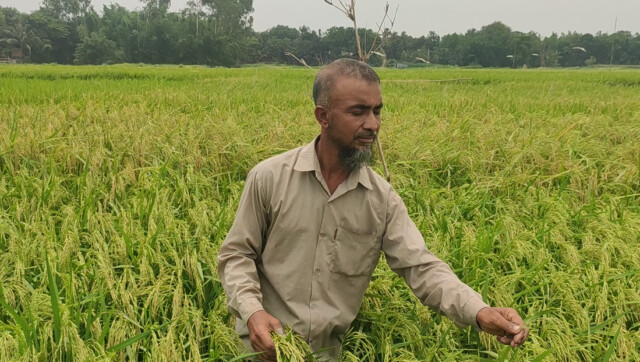
However, the journey of Mozibur is not without obstacles. Local seed varieties are not always available. Organic produce still lacks a fair price in the market. Many farmers remain dependent on high-yield varieties and chemical farming. Above all, the unpredictability of climate remains a constant threat. Yet, Mozibur has a vision to build a strong local seed bank, create a reliable market for organic produce, train fellow farmers, and continue researching new adaptation strategies. He said, “I want young people to join this farming movement.
Farmer-researcher Mozibur Rahman is living proof that sustainable farming does not depend on external technologies alone. Local knowledge, seeds, and resources can be more effective in building resilience. In South Baldhara, he is securing his own livelihood and has become a source of inspiration for many. If his research continues, Mozibur’s work could play a crucial role in shaping the future of climate-resilient agriculture in Bangladesh.