By Shaheda Purna
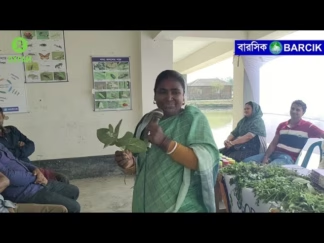
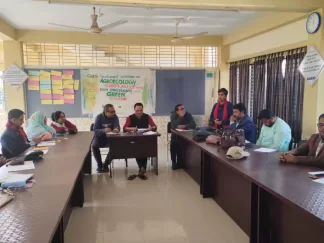
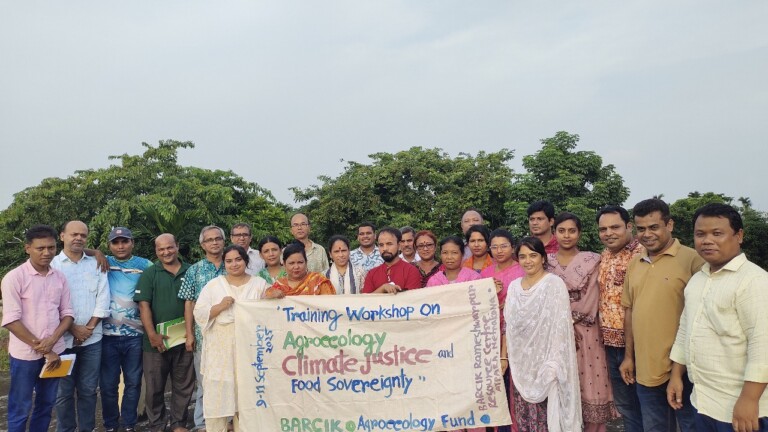
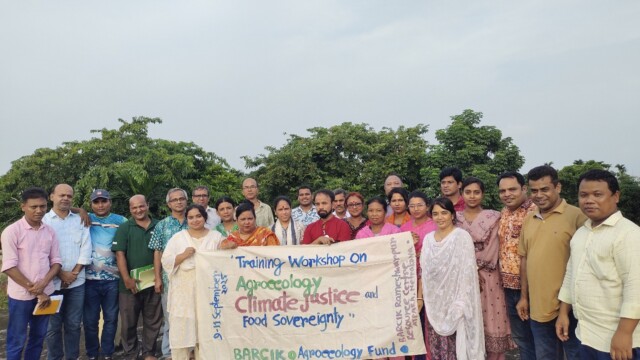
A kick-off training for the Green Coalition initiative, aimed at strengthening agroecology, climate justice, and food sovereignty, was recently held in Netrakona. The training was organized by BARCIK and supported by supported by Agroecology Fund, with participation of staff from its four working areas.
The sessions were facilitated by BARCIK’s Executive Director, Sukanta Sen, along with directors Pavel Partha and Syed Ali Biswas. The training introduced the objectives and structure of the Green Coalition, focusing on building staff capacity and linking conceptual issues to practical community concerns. BARCIK staffs from 4 working areas participated in the kick off training.
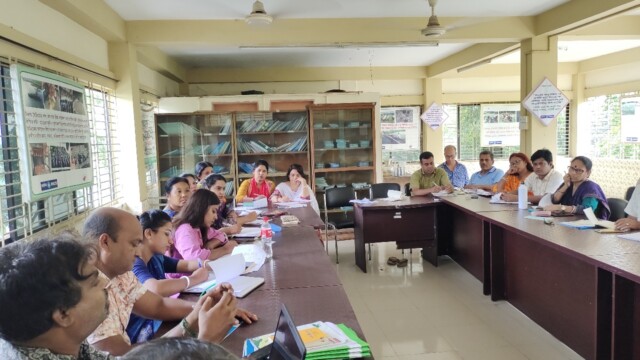
The training began with an introduction to the objective and structure of the Green Coalition, aimed at building the capacities of organizational staff. The facilitators of the kick off training linked conceptual issues to agroecology, climate justice, and food sovereignty. Pavel Partha one of key facilitators of the training articulated connections between these concepts in such a way that staff could identify issues directly and indirectly related to climate change.
Mr. Partha emphasized that climate change is not an abstract phenomenon but a natural process that becomes harmful when human impacts exceed ecological limits, ultimately damaging biodiversity and all forms of life.
The participating staffs actively engaged in the training sharing their views. They discussed achievements and notable movements from four regions, sharing experiences and strategies for overcoming barriers. Examples presented included:
- From Manikganj: The Dhaleshwari river-saving movement,
- From Rajshahi: preservation of Shutihar Dighi, and the campaign to save the Gokul Mathura football field.
- From Satkhira and Shyamnagar: movements addressing persistent salinization of agricultural land.
- From Netrokona: advocacy for construction of a dam to protect agricultural land near hilly areas from flash floods.
These cases were presented as illustrative starting points for the Green Coalition program. The Executive Director of BARCIK observed that only by identifying community problems in such grounded ways can people truly benefit. He said, BARCIK emphasizes a bottom-up approach: the platform will enable communities to take their concerns to the highest levels of government through policy engagement and advocacy.’ He went on saying, ‘BARCIK will facilitate these processes by informing communities about legal boundaries and rights, while promoting a model intended to be self-sustaining.
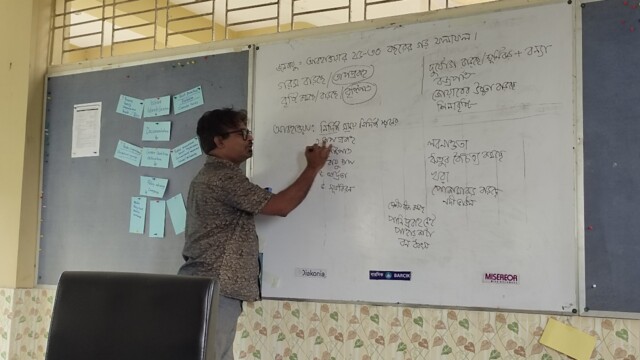
The facilitators of the training mentioned that a central task for operationalizing the platform is identifying the core problems faced by communities. Based on geographic and climatic characteristics, the project will first identify issues, then seek possible solutions from within the community, and finally connect these issues to platforms that can provide media coverage, dialogues, seminars, human chains, and other forms of public action. Issue identification and rights advocacy are therefore, the principal functions of the platform. To accomplish this, BARCIK must develop strong documentation capacities producing videos, short clips, reels, photo cards, photo stories, and digital promotion to amplify community voices.
The facilitators of the training also discussed about the existing guidelines and policies of BARCIK which should be strictly followed in the implementation of the project. These guidelines and policies included Gender Policy, Safeguarding Policy, Conflict of Interest Policy, Whistleblowing Policy, and Green Policy and Communication strategy etc.
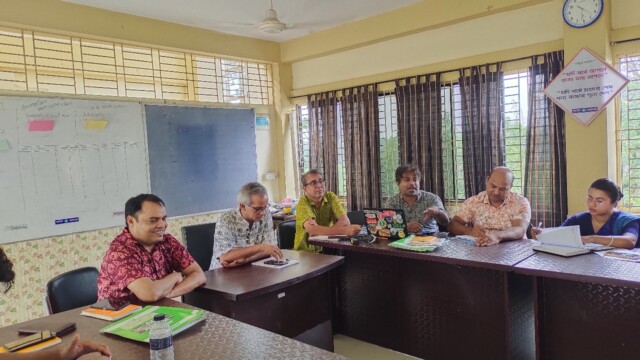
The regional coordinators of the 4 working areas including the key staffs of the project formulated their action plans to be implemented to ensure the project harvests success and cultivates changes among the target communities. These 4 actions plan were shared and presented where all the participants communicated their concerns and ideas to make them smarter and achievable within the time frame. BARCIK programs directors reviewed all these 4 plans of actions and formulated an integrated actions plan to facilitate all activities of the project.
The kick off training concluded with a reiteration of the core concepts of agroecology, climate justice, and food sovereignty. Pavel Partha offered a notable elaboration on climate justice: addressing climate change and mitigating anthropogenic damages concurrently is essential to realizing climate justice.
It is to mention that Green Coalition is a platform that brings together professionals from diverse fields to form a network advocating for communities who feel deprived of their rights and subjected to injustice. BARCIK has supported the development of this platform since early 2024 across its working areas. In 2025, with the kick-off training, the initiative began its official implementation as a project funded by the Agroecology Fund.