By Shaheda Purna, from Dhaka
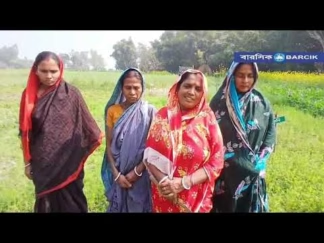
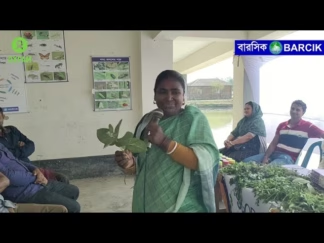
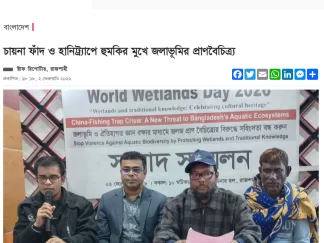
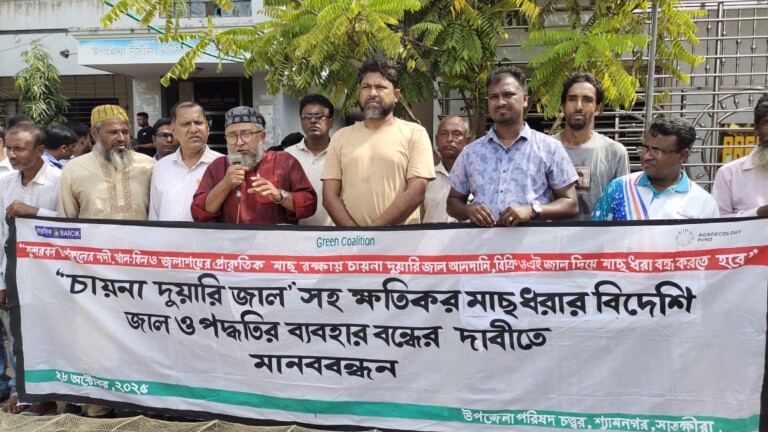
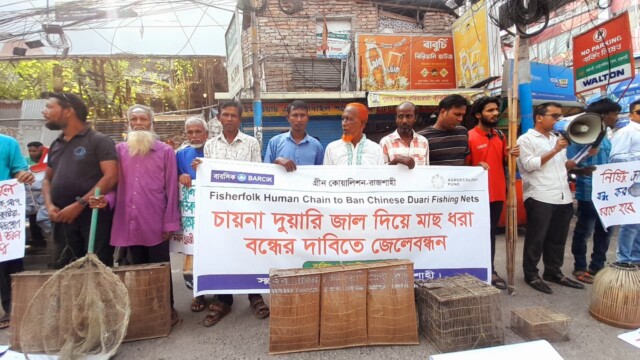
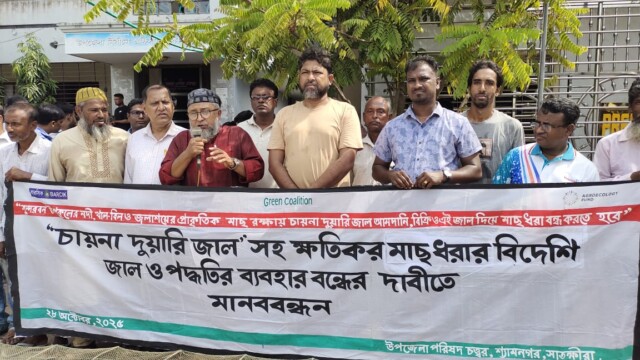
The Green Coalition and BARCIK together organized a 5–day campaign started from 26 October and ended on 29 October in four districts namely Rajshahi, Manikganj, Netrokona and Satkhira of Bangladesh demanding ban on the use, production and marketing Chinese fishing nets to save aquatic life biodiversity. However, the campaigns accumulated collective voices across four diverse agro-ecological zones of Bangladesh, in a powerful embedded call which is to stop the rampant use of fine-meshed “Chinese fishing nets” that threaten our native fish species and aquatic ecosystems. From the dry-zone banks of the Padma in Rajshahi, to the wetland haors of Netrokona, the flood-plains of Manikganj, and the coastal wetlands of Satkhira, the message was the same: our aquatic heritage is under siege.
The Core Issue: Why the Net is a Threat
- The fishing gear in question is a very fine, smooth-meshed net which traps almost all aquatic organisms present in the water body such as small fry, juvenile fish and other organisms alike.
- Its indiscriminate nature disrupts reproduction cycles, reduces fish reserves, and weakens the ecological foundation of rivers, ponds, wetlands, haors and other reservoirs.
- In turn, this undermines the food security, livelihoods and biodiversity of communities that depend on fish as part of their diet and economy.
Legal & Policy Framework at a Glance
- The Protection and Conservation of Fish Act, 1950 (Bangladesh) explicitly provides for the protection and conservation of fish in all water bodies where it defines “fish” broadly (to include bony fishes, prawn, crustaceans, amphibians, etc.) and “fishery” broadly (rivers, haor, canals, tanks, etc.)
- It mandates that the Government may formulate rules regulating “the erection and use of fixed engines. For example: the law prohibits fishing using nets with mesh size less than 4.5 cm in certain contexts.
- The Marine Fisheries Ordinance 1983 (later replaced by the Marine Fisheries Act 2020) covers marine and coastal fisheries, making provisions for management, conservation and development of marine-fishing waters.
- Researchers have noted that while the legal framework exists, implementation, enforcement and coordination remain weak, posing a challenge for effective conservation.
- In short: The laws exist to protect aquatic biodiversity, prohibit destructive gear and set minimum mesh sizes but the use of destructive nets like the fine-meshed “Chinese fishing net” violates both the spirit and letter of these regulations.
Regional Snapshots & Key Insights
Manikganj (Flood-plain near Dhaka)
Being a major food-supply corridor for Dhaka, Manikganj’s rivers and water-reservoirs are vital. A decline in aquatic resource here would not only impact fishers, but ripple into the urban food-chain. The campaign emphasised how loss of fish biodiversity would mean fewer birds, less aquatic oxygen circulation and threatened livelihoods.
Netrokona (Wetland/haor zone)
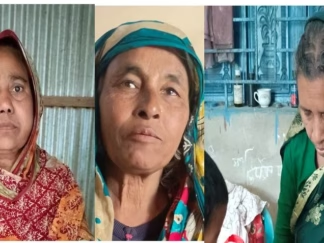
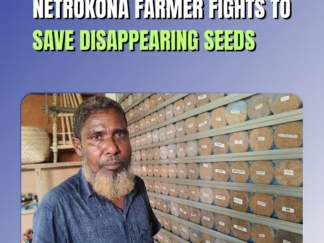
In Netrokona’s haors many freshwater fish species have already vanished. Elder residents recall species no longer seen. Wetland encroachment by powerful interests adds to this; the uncontrolled use of fine-mesh nets accelerates the destruction of fry and juvenile fish, thereby degrading the natural fish-cycle.
Rajshahi (Dry zone, banks of Padma)
Rajshahi’s reliance on small canals and the Padma river means fewer natural reservoirs. Urban-development is filling many canals, but remaining aquatic habitats remain vulnerable to destructive fishing gear, putting the regional fishing community’s future at risk.
Satkhira (Coastal/mangrove-adjacent zone)
Close to the Sundarbans, Satkhira faces brackish-water intrusion and fresh-water scarcity. The region’s fragile aquatic ecosystem is particularly vulnerable: loss of native freshwater fish reduces vital food-sources, and the use of fine-mesh nets severely impacts both fresh and brackish water biodiversity.
Campaign Highlights & Outcomes
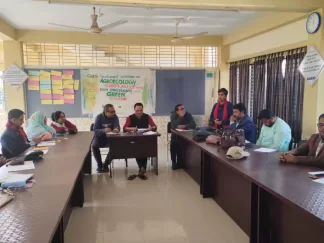
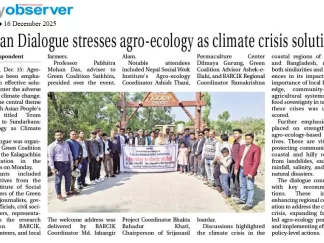
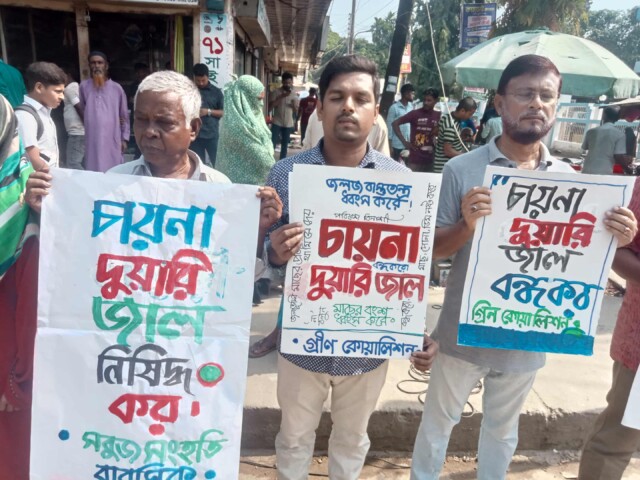
- Over four days the Green Coalition campaign engaged local communities, farmers, fishers, schools, civil society and media in human-chains, public meetings, and memorandum submissions.
- Media coverage was extensive: national portals and TV channels (e.g., Prothom Alo, NTV, Banglavision, Channel 24, Somoy TV) along with district-level outlets covered the issues and demands.
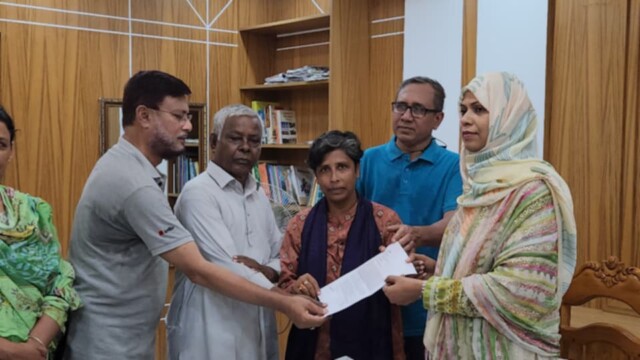
- At the end of the campaign, BARCIK’s regional coordinators and local Green Coalition group presidents submitted a memorandum to the relevant authority, calling for stricter enforcement of fisheries law, community-monitoring, and immediate action to ban irresponsible gear.
- Early-stage public feedback is visible: local discussions have begun; communities are mobilizing around aquatic diversity protection.
Why This Matters (Broader Implications)
- Ecological chain reaction: When young fish are indiscriminately caught, the breeding-stock is weakened. This can reduce oxygen levels in the water, affect predator-prey linkages (e.g., fish-eating birds), and degrade wetland/river ecosystems.
- Livelihoods at stake: Small-scale fishers, pond-based farmers, wetland communities and flood-plain farmers depend on healthy fish stocks—not only for food, but for income and resilience.
- Cultural & nutritive loss: Native fish species hold cultural significance, local tastes and genetic diversity. If lost, the region may be forced to rely only on artificially-grown fish, losing ecological variety and heritage.
- Food security risk: Bangladesh relies heavily on inland fisheries and ponds for animal-protein supply. Depletion of aquatic resources threatens nutritional security and rural economies.
- Policy & governance implications: The existence of laws like the Protection & Conservation Act (1950) and the Marine Fisheries Act (2020) shows intent—yet lack of enforcement, weak monitoring, and gear regulation gaps mean the laws remain under-utilised.
Call to Action: What Needs to Happen
- Immediate enforcement of mesh-size regulations (e.g., minimum 4.5 cm mesh for nets) as mandated under existing law.
- Community-based monitoring: Empower fishers, local NGOs and community groups to monitor water-bodies, report illegal gear usage, and support compliance.
- Awareness & education: Targeted campaigns in fishing communities to explain long-term harms of fine-mesh nets and benefits of sustainable gear.
- Alternative livelihoods & gear transition: Support fishers transitioning to legal gear, pond-culture, or diversified income streams to reduce dependency on destructive methods.
- Policy review & governance strengthening: Encourage the government to review why existing legal frameworks aren’t working fully, address institutional weaknesses and ensure fisheries conservation becomes a priority.
Final Thoughts
The campaign by Green Coalition and BARCIK underscores a critical truth: aquatic biodiversity is not just about fish; it is about people, food, culture, and ecology and future generations. We invite you, our readers and supporters, to stand with us. Because when the rivers, haors and canals falter, so does our collective future.