By Shimul Biswas, from Manikganj
Our planet survives on the biological management of nature, where plants, animals, insects, and microorganisms work together to maintain balance. This interdependence sustains the environment and ensures a sustainable way of life. But today, biodiversity is under grave threat due to climate change, deforestation, river encroachment and pollution, and the excessive use of chemicals in agriculture. In this situation, raising awareness among people at all levels about protecting biodiversity and the environment has become essential.
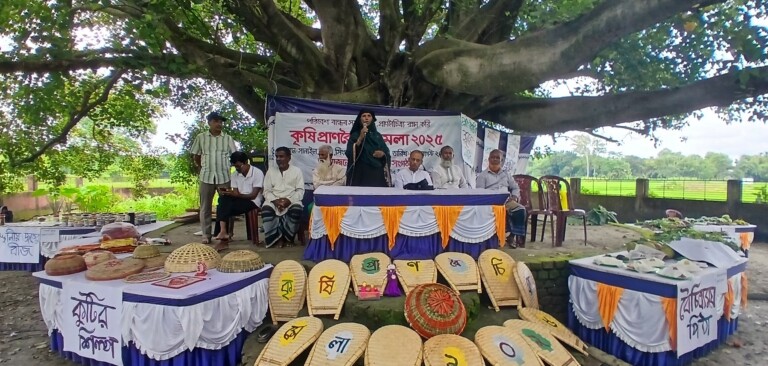
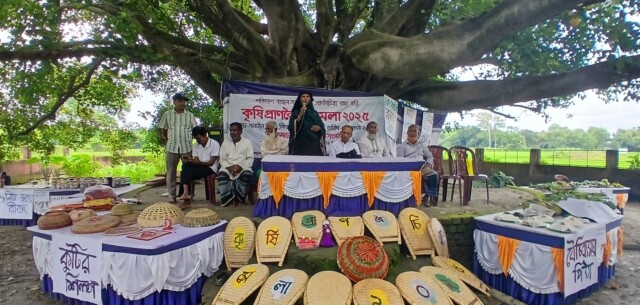
With this aim, a Biodiversity Fair was held on recently, at Sanail Bottola field in Singair upazila of Manikganj. The event was organized by local community organizations and the Upazila Green Coalition Committee, with support from BARCIK.

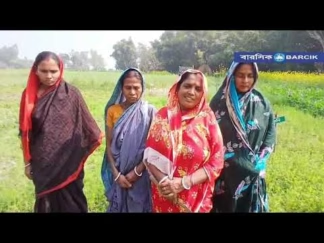
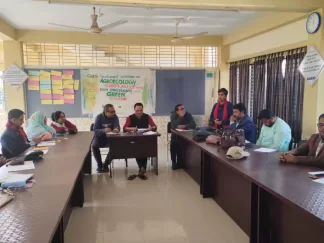
The fair featured agricultural and fruit exhibitions, displays of farm tools and inputs, and a discussion session. More than 200 participants, including officials from the Department of Agriculture, journalists, local government representatives, farmers, young researchers, and community members from 20 villages of Singair, participated.
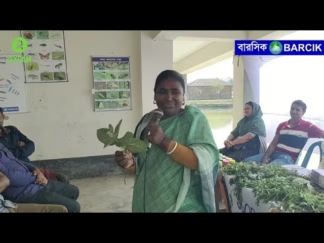
The discussion, presided over by farmer-researcher and nature enthusiast Md. Ibrahim Mia, was addressed by Dr. Kamal Kanti Biswas, social representative; Green Coalition Committee members Pipal Akter and Iman Ali; agriculture officers Kazi Ferdous and Ahsan Habib; farmers Komola Begum, Jaytun Begum, Niranjan Biswas, and Onath Bandhu Biswas; youth representative Lima Akter; and BARCIK’s regional coordinator Bimal Roy.
Speakers said that human greed and the impacts of climate change are pushing nature and biodiversity toward destruction. Natural diversity is shrinking, and with it, cultural diversity is also vanishing. They said that plants, animals, insects, and microorganisms are interdependent, and only a healthy environment can ensure a healthy life for all life forms. Protecting the environment means protecting health, safe food, ecological balance, and leaving behind a livable planet for future generations. Participants also shared various strategies and experiences in environmental protection.
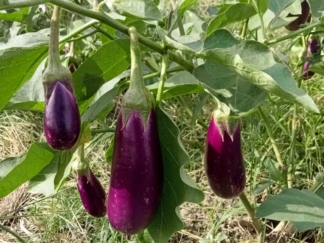
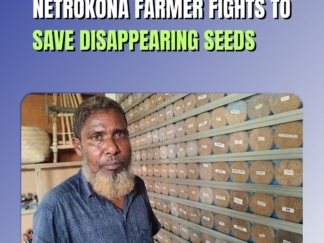
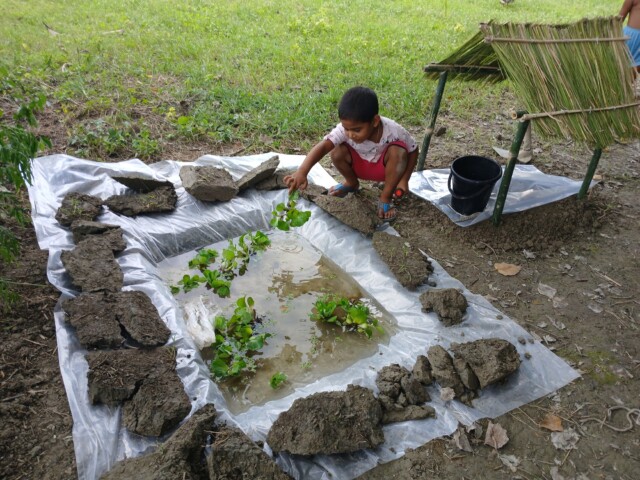
At the fair, 10 stalls were set up by farmers, women, and youth, displaying 150 varieties of local seeds, organic fertilizers, bio-pesticides, 20 types of seasonal fruits, 30 types of vegetables, 80 medicinal and nutritious plants, traditional handicrafts such as Nakshi kantha, bamboo and cane-made farm tools, 10 types of traditional Pitha, agricultural equipment, domestic animals, and even a demonstration of pond ecosystems. Their significance and benefits were highlighted during the exhibition.
Such fairs play a vital role in raising awareness about biodiversity and environmental conservation. Biodiversity protection cannot be done alone, it is a collective responsibility. As the closing message of the event reminds us that, “If nature survives, we survive.” Let us all join hands in protecting biodiversity for the well-being of present and future generations because it is our very responsibility to protect nature and all life forms in this planet.