By Md. Shahidul Islam, from Rajshahi
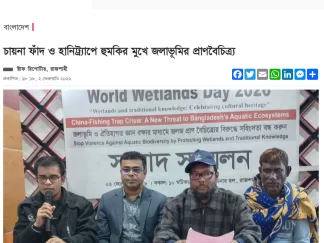
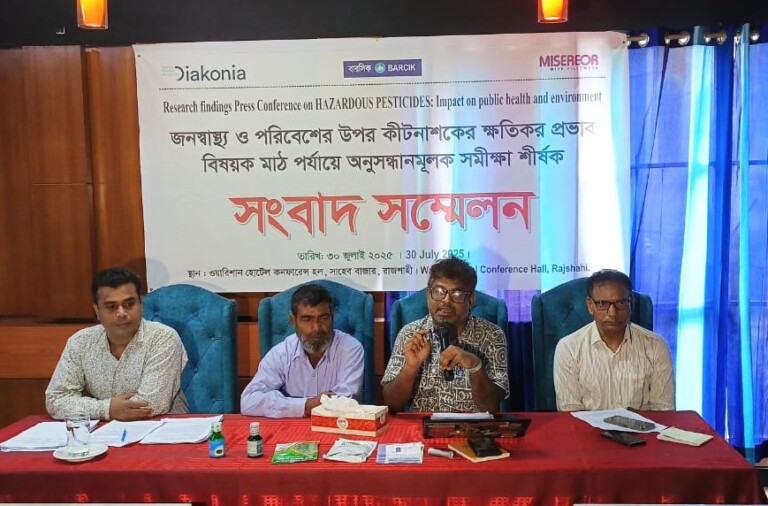
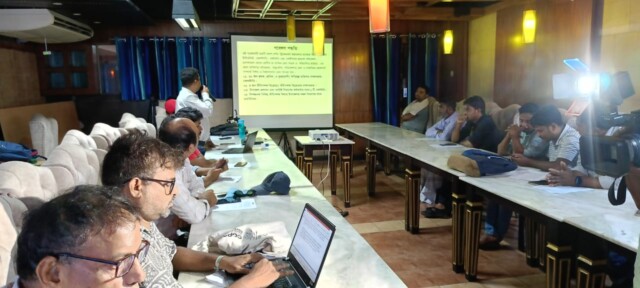
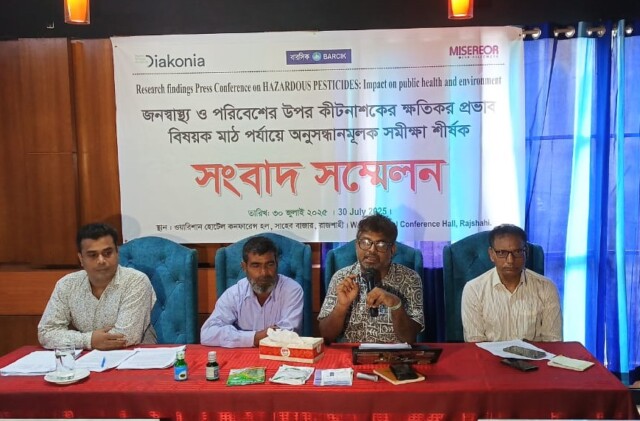
BARCIK has uncovered disturbing evidence of the continued use of banned and hazardous pesticides in the agriculture-dependent Barind region. The findings were unveiled at a press conference held in Rajshahi, following a field-based investigative study conducted in the first half of 2025 across 19 villages in eight upazilas.
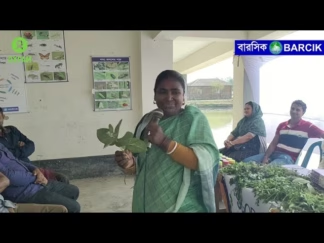
The study, presented by Md. Shahidul Islam, BARCIK’s regional coordinator and lead researcher, reveals the dangerous persistence of toxic chemicals in farming practices, posing serious threats to human health, livestock, biodiversity, and the environment.
Acting Executive Director of BARCIK and supervisor of the study Pavel Partha said, “Despite government bans, harmful pesticides remain easily available in local markets.” He went on saying, “Paraquat, for instance, which was banned in both China and Bangladesh is still being sold under deceptive trade names. We have verified this through field samples and purchase receipts.”
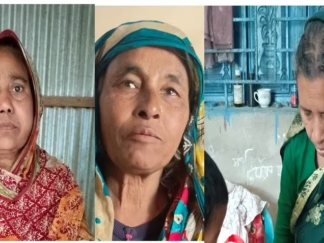
Local farmer Mohammad Jewel from South Balia village shared a tragic incident:
“I applied a pesticide recommended by a local dealer. My cow died after eating grass from the treated field. Later I discovered it was a Paraquat-based pesticide that had long been banned. I received no support or compensation.”
Key Findings from the Study
Widespread Use of Banned Pesticides
68% of 32 affected individuals had used pesticides officially banned in Bangladesh. Alarmingly, over 93% were unaware of the ban or the health risks. These products are sold under misleading trade names with their generic chemical names like Paraquat or Carbofuran hidden in fine print. Examples include:
- Zero Herb 20 SL (Paraquat)
- Furadan 5G (Carbaryl)
- Aroxon 20 SL (Paraquat)
- Gas Tablets (Aluminum Phosphide)
- Talaf 20 SL (Paraquat)
- Pesticides Banned Abroad but Still Used in Bangladesh
19% of cases involved chemicals prohibited in the EU and other countries but still in circulation locally, such as Glyphosate-based products (e.g., Brush 200 SL).
- Improper Handling of Highly Hazardous Pesticides (HHPs)
4% of users were exposed to pesticides that require strict regulatory control due to their extreme toxicity.
- Health Risks from Crop Hormones and Growth Stimulants
Despite being marketed as “safe,” 9% of incidents were linked to plant growth stimulants and hormones deemed risky by WHO and FAO.
- Banned Products Readily Available in Local Shops
A staggering 99% of pesticide vendors in the surveyed areas were found to be selling banned products under various brand names, often without offering any safety information or guidance.
- Widespread Public Health Impact
All users interviewed reported health issues, including respiratory distress, vomiting, headaches, and neurological symptoms. Substances such as Paraquat, Monocrotophos, and Fenitrothion classified as Highly Hazardous by WHO were frequently cited and linked to severe health outcomes, including cancer and organ failure.
- Pesticide-Linked Suicides and Livestock Deaths
Three of the 32 pesticide users had attempted suicide by ingesting pesticides. In all 19 villages studied, livestock—including cows, goats, and poultry—were reported to have died from pesticide exposure.
- Environmental Contamination and Biodiversity Loss
The study noted significant environmental degradation caused by chemicals like Paraquat and Chlorpyrifos. Farmers reported sharp declines in bees, frogs, fish, and bird populations, aligning with FAO and WHO findings that link Highly Hazardous Pesticides to biodiversity collapse and ecological imbalance.
- Weak Law Enforcement and Policy Gaps
Despite having pesticide legislation (Pesticide Act 2018, Rules 2019) and being a signatory to international conventions, enforcement remains poor. Many farmers continue to rely on dealers’ advice, often unknowingly using banned or dangerous substances.
Recommendations
The study calls for urgent and comprehensive action, including:
- Enforcing an immediate ban on the sale and use of all banned pesticides
- Strengthening field-level monitoring and implementation of existing laws
- Establishing local health registries to monitor pesticide-related illnesses
- Banning chemicals harmful to biodiversity and local ecosystems
- Maintaining a traceable sales registry for all pesticide transactions
- Promoting agroecological farming with government incentives and training
- Providing compensation and free healthcare for affected farmers
- Launching mass awareness campaigns through media, schools, and civil society
Conclusion
BARCIK’s investigation exposes a deeply troubling reality: banned and deadly pesticides continue to circulate freely, putting lives, food systems, and ecosystems at severe risk. Unless immediate action is taken by policymakers, regulators, and communities, this silent crisis could escalate into a public health and environmental disaster.