By Parbati Rani Singh, from Netrakona
With the greed of producing higher yields, we are steadily polluting our soil, water, and air mainly through the use of chemical fertilizers and pesticides. These practices are degrading our environment and distancing agriculture from the hands of farmers. This leads to the disappearance of native crop varieties and farmers are losing control over their own seeds, becoming increasingly dependent on markets and corporations.
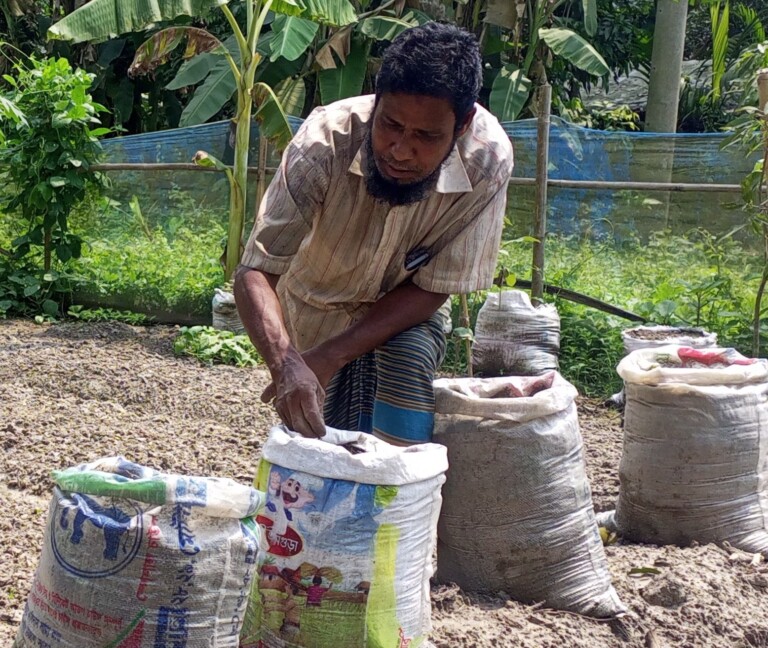
Amidst of this cruel reality, a different story is unfolding in Rameshwarpur village of Atpara upazila, Netrokona. Farmer Sayed Ahmad Khan Bachchu has transformed his home into a vibrant Agroecology Learning Center (ALC) which has inspired many farmers treating it as one of the model community-led sustainable agricultures.
Born in 1958, Sayed Ahmad began farming alongside his father from a young age. Although he received only primary education, he developed deep knowledge and skills in farming from his father. His passion for nature and farming led him to establish a farm-based lifestyle rooted in self-reliance.
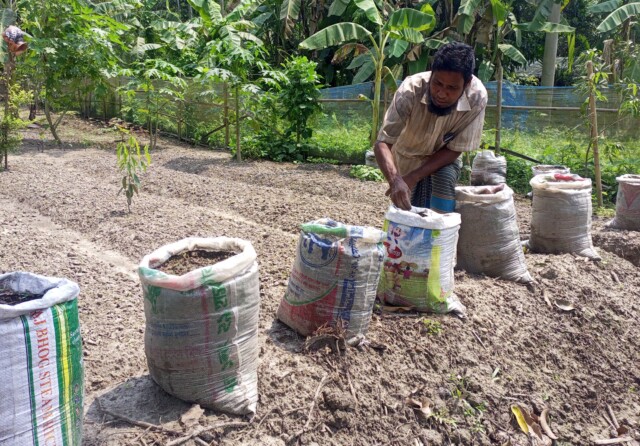
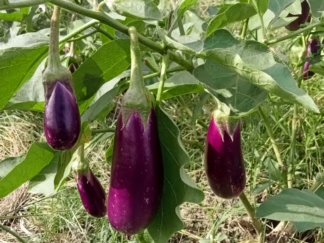
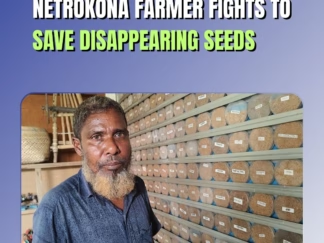
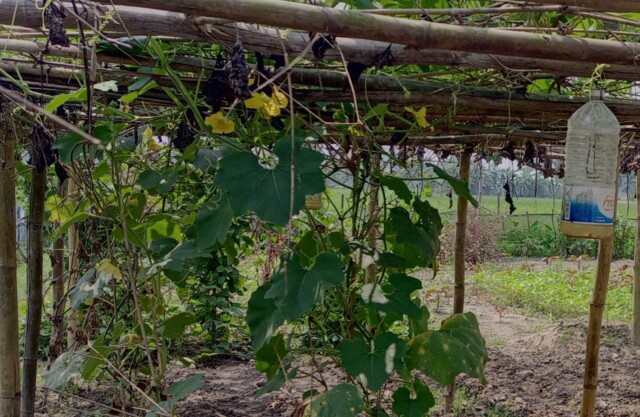
In 2024, under his guidance, the Agroecology Learning Center was established. It aims to ensure food sovereignty, local adaptation to climate change, and knowledge sharing. Through his ALC he cultivates and conserves native rice and vegetable seeds, prepares vermin compost and organic pesticides to produce safe foods utilizing every inch of his lands. He even has established a seed library of native crop to familiarize sustainable agriculture to the students and new generation with aim to encourage them engaging actively in safe food production.
Under the ALC Sayed cultivates a wide variety of vegetables, fruits, grains, and rears livestock throughout the year. This environment friendly food production helps him meeting his family’s nutritional needs, earns cash by selling the surplus in local markets and even he manages to share the produces with neighbors and relatives that boosts his mutual relationship with them.
However, currently Sayed Ahmed Bacchu’s ALC has 40 varieties of vegetables, grains, and spices, 10 types of organic pest control ingredients, medicinal plants and uncultivated food plants and livestock including cows, goats, ducks, chickens, and pigeons.
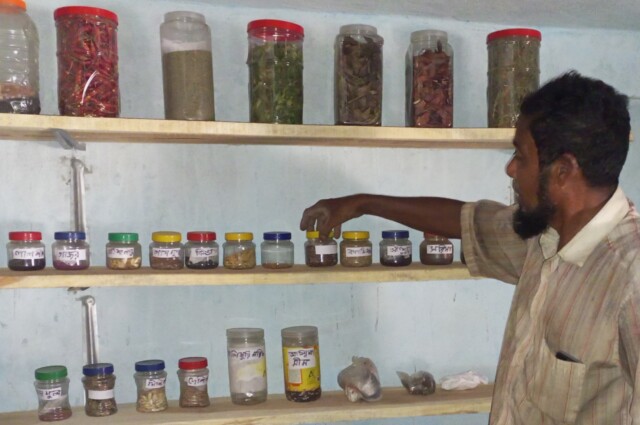
Last year, 47 families have visited the ALC. Officials from the agriculture department of the government, farmer group members, and many local men and women have come to learn from this ALC. He has exchanged 22 varieties of seeds with around 45 farmers and shared farming practices, weather insights, and seed knowledge with over 40 individuals.
Sayed Ahmad’s Agroecology Learning Center stands as a living example of human-nature interdependence, showcasing practical and sustainable pathways for farmers to ensure food security and environmental harmony through adopting agroecology.