By Gunjon Rema, Kalmakanda, Netrakona
Nestled at the foothills along the border of Kalmakanda Upazila in Netrakona lies Chandradinga, a village often devastated by flash floods from the surrounding hills. Each year, fertile fields are buried under thick layers of sand, rendering once-productive lands barren. For local farmers, this has meant lost livelihoods and deepening despair.
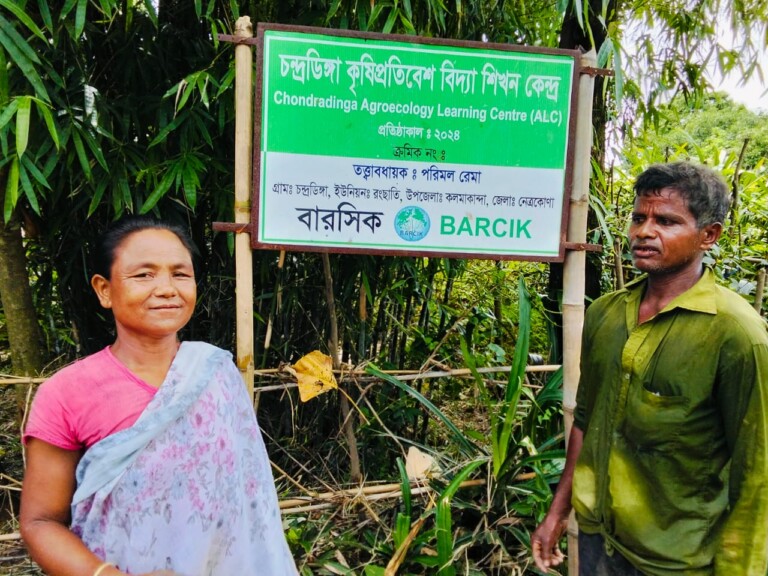
Yet amid these challenges, a new hope has emerged. In 2024, with the initiative of local farmer Porimal Rema and the support of BARCIK, the Chandradinga Agroecology Learning Center was established. Grounded in participatory, ecological, and sustainable farming principles, the center has become a local knowledge hub where farmers learn through hands-on experience.
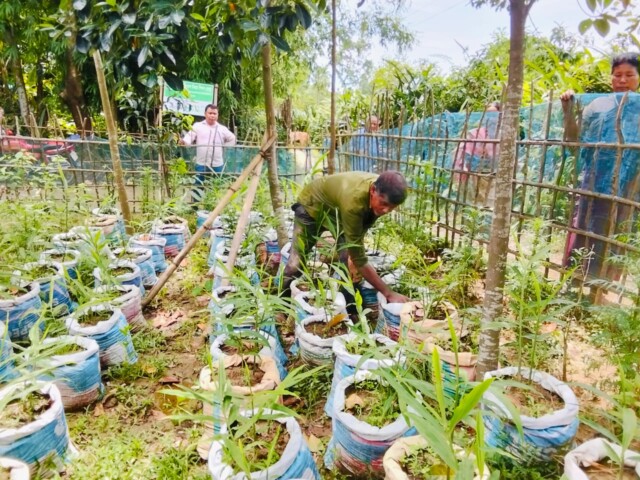
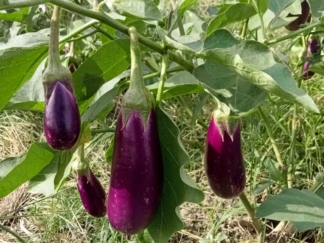
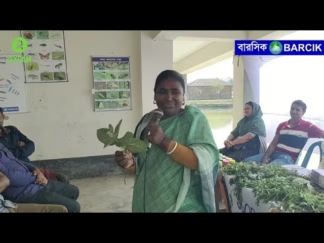
At this agroecology learning center, farmers are practicing vermicompost production, experimenting with crops like maize, peanuts, and sugarcane on sandy soils, and cultivating ginger, chilies, and leafy greens in sacks during monsoon floods. They’re building bamboo beds to grow vegetables in low-lying, waterlogged plots, conserving indigenous seeds using traditional methods, and applying climate adaptation techniques that blend ancestral knowledge with modern solutions.
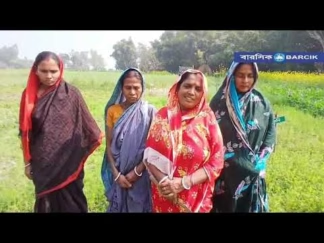
The center does more than promote climate-resilient agriculture—it also nurtures leadership among women and youth. Women farmers now see sand-covered land as an opportunity rather than a burden.
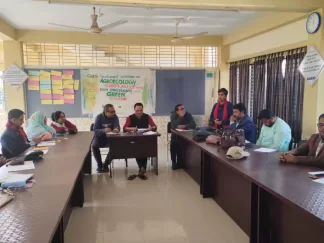
Under Porimal Rema’s leadership, and with BARCIK’s facilitation, a management committee was formed to guide the center’s activities. It has hosted rice research plots, World Water Day rallies, farmer exchange visits, and trainings on vermicompost production and sustainable agriculture.
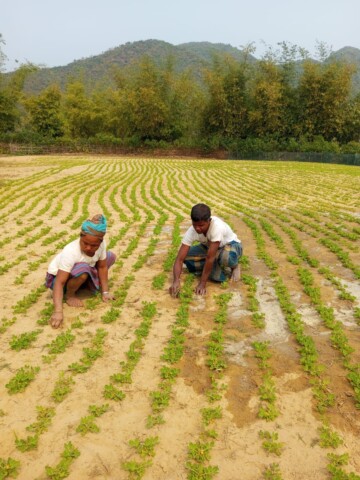
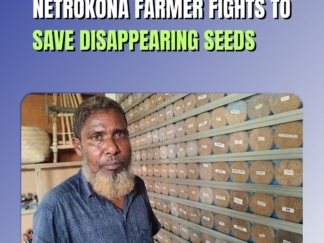
By growing vegetables at home, households have reduced their dependence on markets and significantly lowered farming costs through the use of organic inputs. Today, the center serves as a mini-resource bank for seeds, medicinal plants, uncultivated food plants, and organic farming materials.
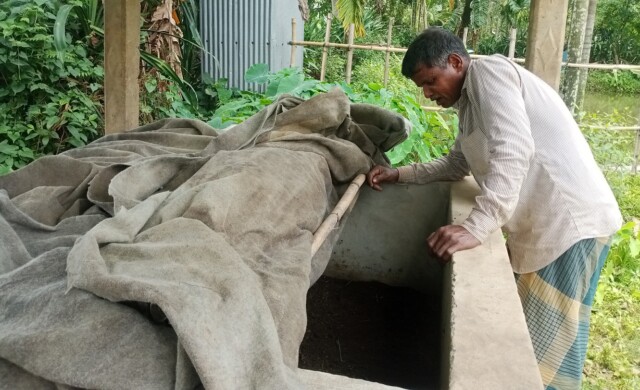
Its success has attracted widespread attention. Agricultural officers, NGO staff, and coordinators from other agroecology learning centers have visited Chandradinga to learn about crop cultivation on sandy land, sack gardening during monsoon floods, vermicompost production, organic agriculture, and seed conservation practices.
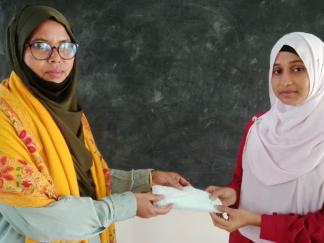
So far, seven families have received native rice seeds, pumpkin, bottle gourd, and sugarcane cuttings from the center. Additionally, chili and bean seeds have been sourced and cultivated from the Bonbera learning center.
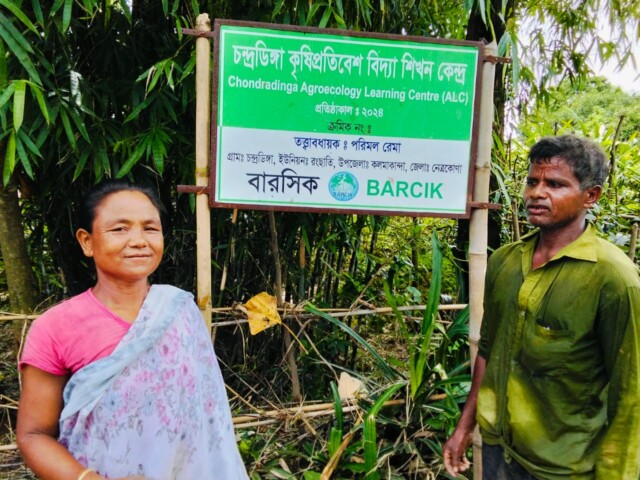
Chandradinga Agroecology Learning Center now stands as a beacon of resilience, demonstrating that through community participation, respect for indigenous knowledge, and environmental responsibility, sustainable and secure food systems can be achieved.