By Ohidur Rahman from Netrakona
In the remote villages of Netrokona, a quiet revolution is taking place, one that challenges the dominance of commercial seed companies and revives the age-old tradition of farmers conserving, sharing, and cultivating their own seeds. Led by the farmers themselves and supported by BARCIK, this grassroots initiative is restoring agricultural sovereignty, biodiversity, and cultural pride in rural Bangladesh.
For decades, local farmers have witnessed a disturbing trend: their native seeds which was once the foundation of their food systems have been disappearing, replaced by corporate-owned hybrid varieties. These commercial seeds often come at high prices and with restrictive conditions, forcing farmers into cycles of dependency and loss of control over their food production. What was once the farmer’s own treasure has become a commodity sold back to them in packets, eroding both their autonomy and biodiversity!
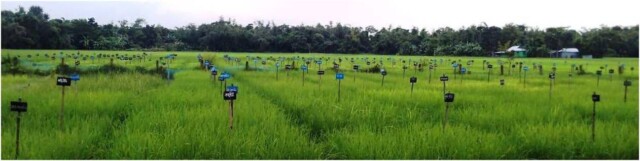
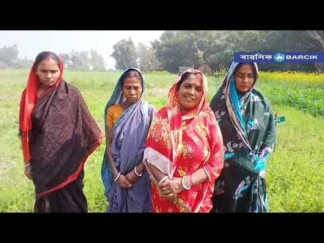
Recognizing the crisis, farmers in villages like Tushipara and Baghra Haor of Atpara Upazila began organizing seed collection drives as early as 2005. With guidance from BARCIK, they gathered traditional rice varieties from neighboring villages during the Aus season and established small research plots to test and observe them. What began with just five rice varieties has now evolved into a full-fledged community-based seed conservation movement.
Over the years, these farmer-led experiments expanded across Aus, Aman, and Boro seasons. Today, farmers in the region cultivate more than 68 native rice varieties, some of which were nearly extinct. Names like Pankhiraj, Kalijira, Tulshimala, and Chinishail are now being proudly grown again, alongside dozens of other heritage varieties.
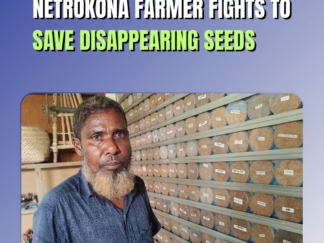
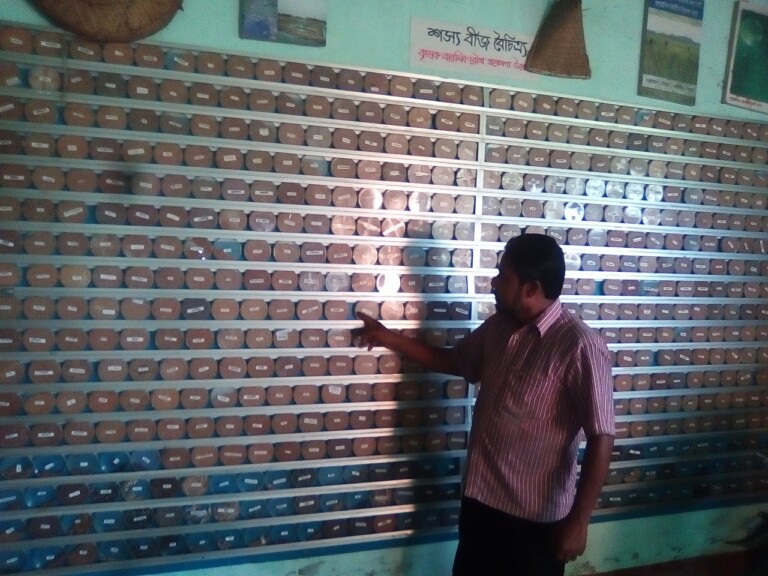
With the aim to support this initiative, the farmers established “Grameen Beejghor” (village seed houses) in various villages of Netrokona including Gobindashree, Uchitpur, Mansur, Banbhera, and Naguya. These seed houses serve as community banks where seeds are conserved, exchanged, and returned known as a sustainable model of seed circulation that ensures continuity, accessibility, and genetic diversity. Farmers borrow seeds before planting season and return the same or more after harvest, allowing the system to thrive and expand.
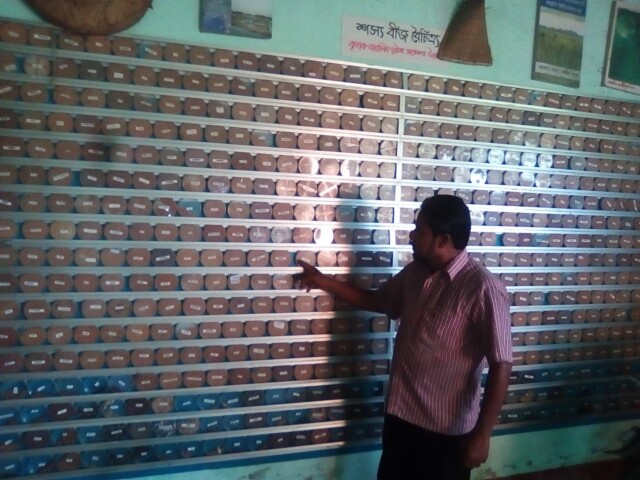
This locally rooted effort has spread far beyond the boundaries of Netrokona. Farmers and organizations from over 25 districts including Mymensingh, Sunamganj, Sherpur, Rajshahi, Satkhira, and even institutions like BADC, BRRI, BINA, and Bangladesh Agricultural University have collected seeds from these village seed banks for research and cultivation. The knowledge and seeds have traveled village to village, district to district, even reaching international visitors from Nepal, India, Germany, Sweden, and Spain who came to learn from this model.
What distinguishes this initiative is not just seed conservation, it is seed empowerment. Through farmer-led research, experimentation, and sharing, they are reclaiming control over their agricultural futures. They are also reviving cultural identity, as traditional varieties often carry stories, songs, and seasonal memories passed down through generations.
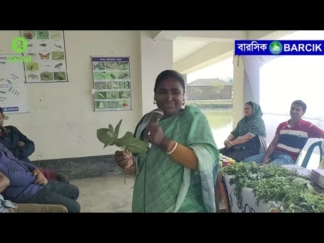
With the slogan “Farmer’s Seed is Farmer’s Right”, the movement has grown into a symbol of resistance against corporate control and environmental degradation. Farmers organize seed fairs at village, upazila, and national levels, raising awareness among communities and policymakers alike. These fairs, along with biodiversity festivals and local exhibitions, have helped reconnect people with their native agricultural heritage.
Today, BARCIK holds a collection of 504 traditional rice varieties of which 24 from the Aus season, 423 from Aman, and 57 from Boro. All of these seeds are being cultivated, conserved, and studied under farmer stewardship. This extraordinary journey from loss to revival highlights the resilience, innovation, and collective power of farmers when supported by thoughtful facilitation and long-term vision.
At a time when the world faces climate uncertainty, food insecurity, and biodiversity loss, the Netrokona model offers a powerful reminder: the future of farming may well lie in the wisdom of the past and in the hands of those who have always nurtured the soil.