Introduction
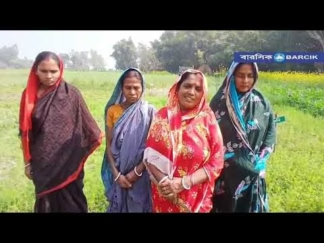
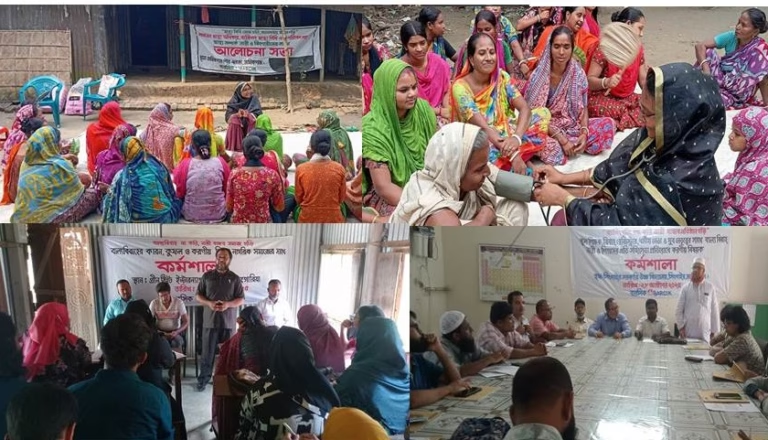
For nearly eight years, BARCIK has worked alongside communities in Singair and Manikganj, fostering trust, dialogue, and locally led development. Rather than positioning itself as the driver of change, the organization has consistently encouraged communities to recognize their own action and leadership. At the center of this approach is the belief that sustainable women’s empowerment emerges when communities themselves take ownership of transformation. Through sustained engagement with women, men, adolescents, teachers, and children, BARCIK has created safe spaces where women and girls can openly discuss their lives, challenges, and rights. These spaces have allowed women to build confidence, claim their voice, and actively participate in community decision-making. The following three interconnected stories demonstrate how community leadership has strengthened women’s empowerment, enhanced child protection, and nurtured collective responsibility for gender equality. Together, they reflect the spirit of the International Women’s Day 2026 theme which is “Rights. Justice. Action. For ALL Women and Girls”. These three interconnected stories described how women and girls fight for their rights and access through organized actions.
Mila Akter: A Community Woman Leading Change
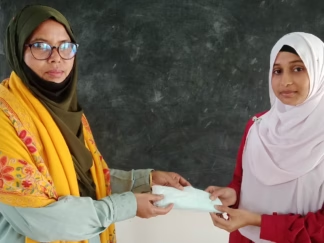
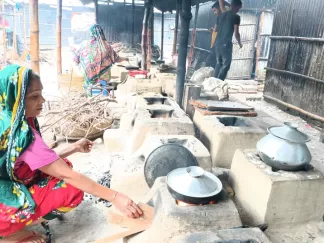
Women’s empowerment is most visible in the lives of women who transform personal struggle into collective strength. Mila Akter from Pachbaroil village embodies this quiet but powerful leadership. Mila was a bright student and completed her Secondary School Certificate (SSC) with distinction in 2014 from Kaniz Fatema Girls’ School. She later enrolled at Manikganj Women’s College with dreams of continuing her education. However, family pressure led to early marriage before she could complete her studies. Although her brother agreed to the marriage on the condition that she could continue studying, reality proved more complicated. As a young bride, Mila faced heavy household responsibilities. Caring for an ill father-in-law, an elderly mother-in-law, and a sick sister-in-law left little time for personal aspirations. Yet her determination remained strong. While pregnant, she sat for her Higher Secondary Certificate examination and passed successfully. Financial hardship and domestic responsibilities, however, eventually forced her to pause her academic journey. The COVID-19 pandemic in 2021 brought further challenges when her husband lost his job. With seven family members depending on a single income, Mila began giving private tuition to support the household. At the same time, she started nurturing a new vision for her daughters’ future. Without sons in the family, she deliberately teaches her elder daughter practical skills such as riding a bicycle, believing that confidence and self-reliance are essential for girls’ empowerment. Mila joined BARCIK’s gender project in January 2021. Through regular meetings, discussions, and training sessions, her confidence and leadership gradually grew. Despite her own struggles, she began supporting others in her community.
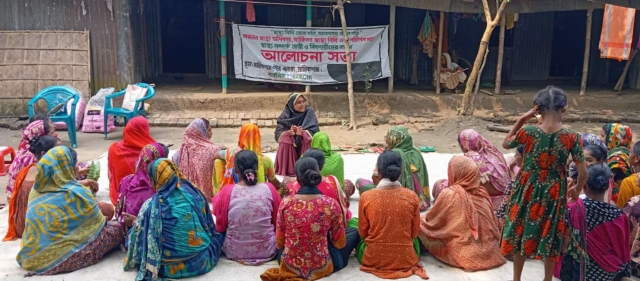
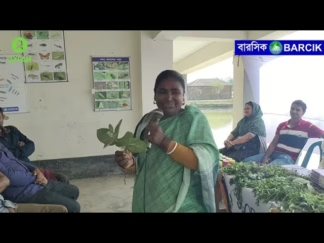
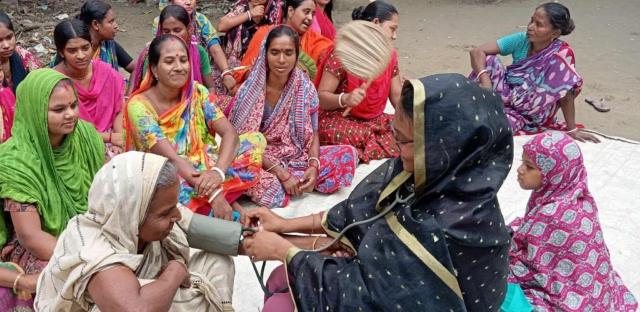
After receiving basic health awareness training, Mila started checking neighbors’ blood pressure, offering health advice, and connecting people with available services. These everyday acts of care have earned her deep trust within the community. Inspired by this recognition, Mila now dreams of completing basic medical training and opening a small home-based pharmacy that would both support her family and improve access to healthcare in her village. Through BARCIK’s platform, Mila also facilitates awareness sessions on child marriage, women’s rights, safe and unsafe touch, and adolescent health. Women in the community respond to her call and participate actively in discussions that were once considered uncomfortable or taboo. Today, Mila is more than a caregiver within her household. She is a community leader, advocate, and mentor, demonstrating how empowered women can inspire transformation around them.
Building a safer future for girls and children
Sustainable women’s empowerment also requires investing in the next generation. Over several years, BARCIK has supported youth forums, adolescent clubs, and women’s groups across 16 villages in Bayra Union and Singair Municipality. These groups plan activities collectively and lead initiatives to prevent child marriage, sexual harassment, and violence against women and girls. Increasing public discussions around child sexual abuse prompted adolescents to take action. With BARCIK’s support, they organized awareness sessions on “Good Touch and Bad Touch.” These sessions teach children about body safety, personal boundaries, and their right to say no to inappropriate behavior. Children learned that certain parts of their body should never be touched except by caregivers for necessary care. They also understood the difference between safe interactions and actions that make them uncomfortable. For many adolescents, this was the first time such topics had been openly discussed, yet they quickly recognized their importance. Importantly, adolescents began sharing this knowledge with younger siblings and neighborhood children, allowing awareness to spread naturally within communities.
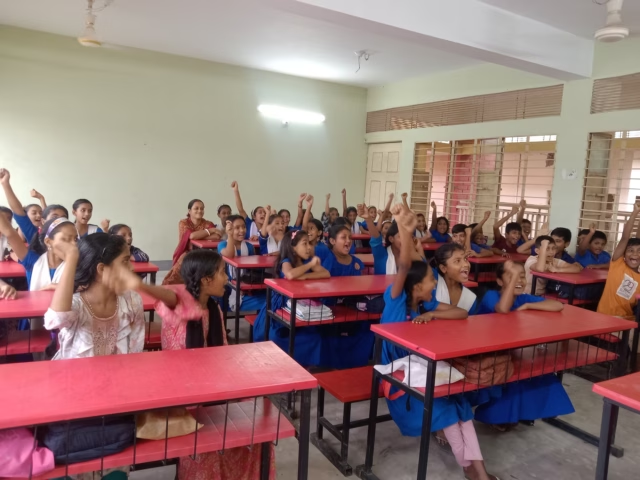
In 2024, discussions began to introduce these sessions in eight primary schools across Bayra and Singair. Although some teachers initially worried that children might become “too aware,” BARCIK’s long-standing engagement with schools helped build trust. Once the sessions began, teachers recognized their importance. Khorsheda Begum, Head Teacher of Jamalpur Government Primary School, emphasized that the initiative fills a crucial gap in children’s education. Teachers from Baira Primary School and Noyabari Government Primary School also highlighted the need to continue these sessions regularly from preschool through grade five. By empowering children with knowledge and confidence, communities are helping create a safer environment where girls can grow without fear and pursue their dreams.
In Singair, BARCIK’s long-standing collaboration with schools has gradually reshaped the role of teachers beyond classroom instruction. Through years of training, dialogue, and joint initiatives, teachers have become trusted figures in addressing social issues affecting women, students and families. When child marriage and gender-based violence emerged as pressing concerns, teachers were already equipped to respond.
BARCIK has promoted gender equality in Singair and Manikganj by engaging schools, adolescent groups, youth organizations, women’s collectives, and broader community members. Activities such as workshops, community dialogues, village sports, seminars, and awareness campaigns have focused on understanding gender norms, reducing violence, and preventing exploitation. Since 2023, preventing child marriage has become a central priority, with focused work in six secondary schools across Singair municipality and Bayra Union.
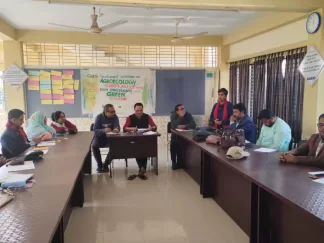
Through consistent relationship-building, teachers have emerged as focal points for monitoring student attendance, identifying students at risk of early marriage or abuse, and facilitating referrals through government service mechanisms. Teachers Abu Bakar Siddiqui, Selim Hossain, Saif Sujan, Sujan Mahmud, and Prabhat Sorker now play active roles in prevention efforts and women empowerment process. Beyond monitoring, these teachers organize workshops, share learning with colleagues, and contribute to include women decision-making processes that shape BARCIK’s future principles and values. Their involvement in initiatives such as the prevention of violence against women and girls, Green Coalition, community networking, and mobilization has strengthened their sense of ownership. Today, they are widely recognized as partners in promoting gender equality, preventing child marriage, and protecting women and girls which ensures that these efforts remain sustainable, inclusive, and community-driven.
Male Teachers as Partners in Social Change and women empowerment
In Singair, BARCIK’s long-standing collaboration with schools has gradually reshaped the role of teachers beyond classroom instruction. Through years of training, dialogue, and joint initiatives, teachers have become trusted figures in addressing social issues affecting women, students and families. When child marriage and gender-based violence emerged as pressing concerns, teachers were already equipped to respond.

BARCIK has promoted gender equality in Singair and Manikganj by engaging schools, adolescent groups, youth organizations, women’s collectives, and broader community members. Activities such as workshops, community dialogues, village sports, seminars, and awareness campaigns have focused on understanding gender norms, reducing violence, and preventing exploitation. Since 2023, preventing child marriage has become a central priority, with focused work in six secondary schools across Singair municipality and Bayra Union.
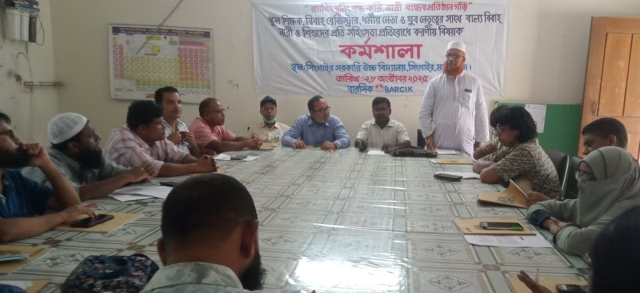
Through consistent relationship-building, teachers have emerged as focal points for monitoring student attendance, identifying students at risk of early marriage or abuse, and facilitating referrals through government service mechanisms. Teachers Abu Bakar Siddiqui, Selim Hossain, Saif Sujan, Sujan Mahmud, and Prabhat Sorker now play active roles in prevention efforts and women empowerment process. Beyond monitoring, these teachers organize workshops, share learning with colleagues, and contribute to include women decision-making processes that shape BARCIK’s future principles and values. Their involvement in initiatives such as the prevention of violence against women and girls, Green Coalition, community networking, and mobilization has strengthened their sense of ownership. Today, they are widely recognized as partners in promoting gender equality, preventing child marriage, and protecting women and girls which ensures that these efforts remain sustainable, inclusive, and community-driven.
Conclusion
The stories of teachers, women, adolescents, and children in Singair and Manikganj reveal a powerful truth: lasting change emerges when communities themselves lead the process. Teachers supporting girls’ education, women like Mila stepping into leadership roles, and adolescents spreading awareness about safety and rights all contribute to a collective movement for gender equality. Each effort strengthens the others. Awareness in schools influences conversations at home, while women’s leadership inspires community action. This transformation did not happen overnight. It is the result of nearly eight years of patient relationship-building, dialogue, and community-led initiatives. By investing in people, nurturing women’s leadership, and encouraging collective responsibility, communities in Singair and Manikganj are building a future where women and girls are empowered, protected, and able to lead the change they wish to see.
The change stories were developed by Ritu Robi das, Rina Akter and Asia Akter from Manikgonj