By Happy Roy from Netrokona
How are our Joyitas? The women who quietly carry families, dreams, and entire communities on their shoulders?
The truth is, the contribution of women in our country cannot be measured in money. In most families, men earn and fulfill certain defined duties. But the invisible, relentless responsibility of holding a family together, the emotional labor, the sacrifices, and the silent endurance so often belongs to a woman.
Not every family looks the same. Some struggle with poverty, some with lack of support, and some with unbearable injustice. In many houses, women endure neglect and even abuse. And yet, despite everything they rise. They stretch beyond their limits. They swallow their pain. They keep going for their children, for their families, for a better tomorrow.
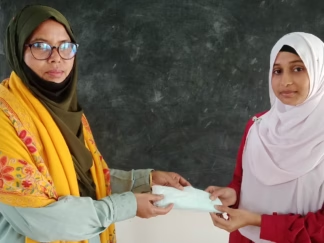
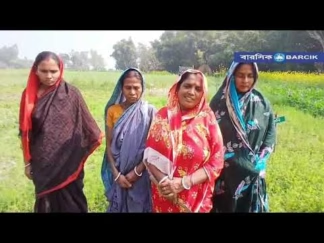
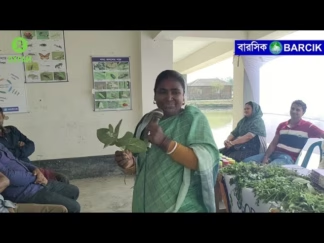
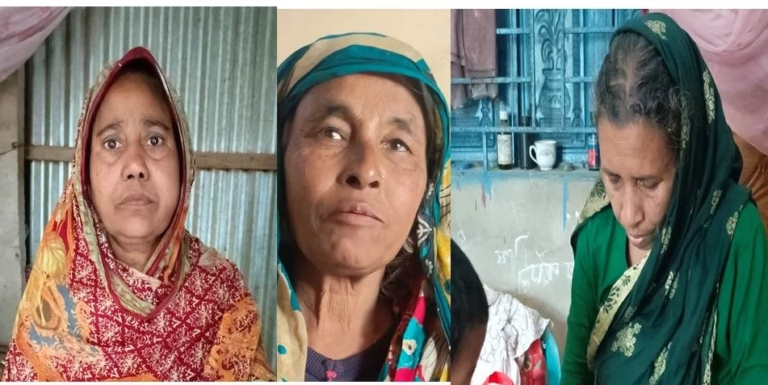
Some women do not stop at the boundaries of their houses. With courage that often goes unnoticed, they step into society and leave lasting marks. To recognize such strength, the Ministry of Women and Children Affairs honors them with the “Joyita” Award. From Lakshiganj Union in Netrokona District, one woman received the Joyita Award at the upazila level in 2019, and two more in 2020. In 2021, one of them was honored again at the divisional level. These women are not celebrities. They are not wealthy. They are ordinary women with extraordinary courage. These women include Rupa Akter, a woman who defeated the horrors of abuse (2019, 2021), Momota Akter, a truly successful mother (2020) and Rowshonara, A woman devoted to education (2020).
Each of them has long been connected with BARCIK, which witnessed their struggles from up close and stood beside them whenever possible. But what does life look like for them now, years after the applause faded?
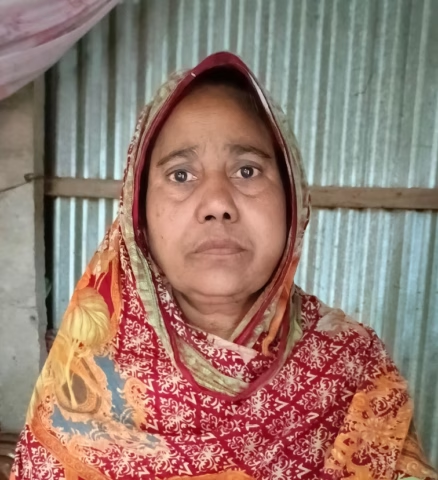
Rupa Akter’s story is one of quiet resilience. Unable to endure her husband’s abuse any longer, she once walked away from that life with nothing but determination. She worked in other people’s houses, washing dishes and cleaning floors, just to raise her son and daughter. When her body could no longer tolerate such hard labor, she opened a small tea stall in Lakshiganj market with some support from BARCIK. That tiny stall became her battlefield and her victory. Cup by cup, day after day, she educated her children and fed her family. Today, due to health issues, she can no longer run the shop. Her daughter is married. Her son studies while repairing mobile phones to support the household. Life is still not easy but something has changed. Before, people looked down on her for running a tea stall. After receiving the Joyita Award, those same people greet her with respect. When she enrolled her son in college, her Joyita certificate earned her recognition and dignity. Sometimes, respect is a bigger victory than money.
 0-2016×4492-0-0#
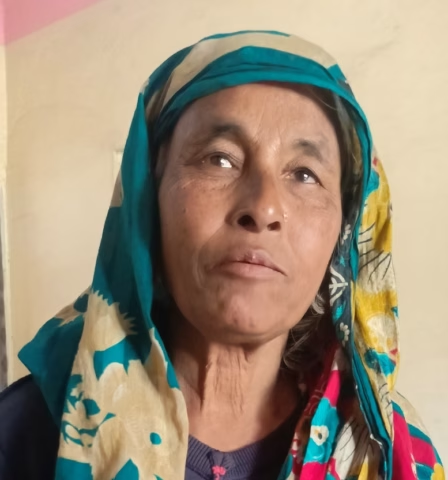
Momota Akter from Sultanagati village carries a different kind of triumph. With education only up to Grade 5, she never allowed poverty to dictate her children’s future. While managing her house and helping her husband sell nursery saplings, she made one decision that changed everything: her children’s education would never be compromised. There were days she stayed hungry so her children could eat and attend school. Today, one son works at the Department of Social Services in Dhaka. Another teaches in Uttara while running a business. Her third son and two daughters completed degrees in Computer Science and are building their own careers. The thatched house is gone replaced by a modern house. Cultivable land has been purchased. There is no longer scarcity in her kitchen. Her sons even ask their father to stop working in the nursery. After receiving the Joyita Award, her respect in the family and community grew immensely. Her son’s in-laws framed her Joyita certificate and hung it proudly in their home. When she talks about that moment, her eyes fill with tears. Not because of the frame but because her sacrifices were finally seen.
 0-2016×4492-0-0#
And then there is Rowshonara from Bayraura village, who gave her entire life to educating poor children. Ignoring criticism and social pressure, she started a kindergarten school in her own home. She went door to door convincing parents. She taught children for free. She bought their books and notebooks with her own money. People doubted her. Some mocked her. Today, her school named “Jhalok Kindergarten” receives educational materials from the upazila Education Office. Parents who once refused to send their children, even for free education, now bring them proudly. Enrollment has increased. Respect has followed. The same people who once questioned her now stand beside her.
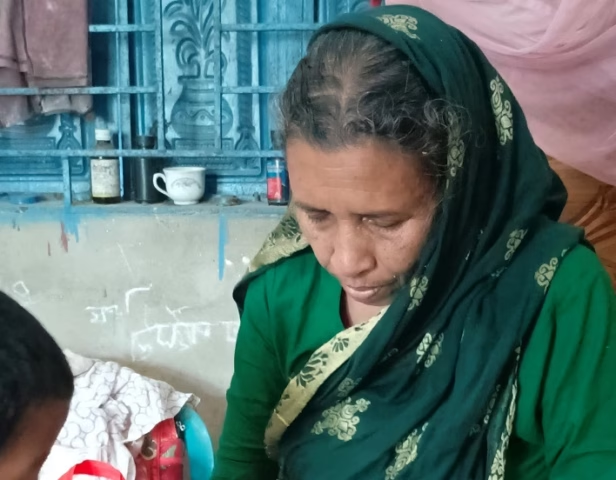
The Joyita Award does not come with money. There is no financial grant attached. It is just a crest and a certificate. But sometimes, recognition heals wounds that money never could. None of these women had formal higher education. Yet they are deeply educated in resilience, humanity, responsibility, and love. They did not wait for perfect conditions. They simply believed that something had to be done for their families, for their communities and they acted. That is how they became Joyitas. Not because life was easy but because they refused to give up.